

High-Performance Sports Lighting: Beyond Basic Illumination
In high-speed indoor sports—such as basketball, volleyball, and competitive badminton—visual precision is the difference between a peak performance and a missed play. While facility managers often focus on lux levels (illuminance) and uniformity, a more insidious factor frequently compromises player safety and broadcast quality: stroboscopic flicker. This phenomenon, often invisible to the naked eye until it triggers physical symptoms, is a byproduct of low-quality LED drivers and mismatched control systems.
To maintain a professional athletic environment, lighting must be "Bright and Solid." This means achieving high efficacy (lumens per watt) while ensuring the light output remains stable under all conditions, including deep dimming. According to the 2026 Commercial & Industrial LED Lighting Outlook: The Guide to Project-Ready High Bays & Shop Lights, the transition to flicker-free technology is no longer a luxury but a baseline requirement for modern sports facility compliance.

The Physics of Flicker: SVM and PstLM Metrics
Stroboscopic flicker occurs when the light source fluctuates in intensity at frequencies that interact with the motion of objects or the human eye. In sports, this creates the "strobe effect," where a fast-moving ball appears to jump across the court rather than moving in a smooth arc. To quantify this, the industry relies on two primary metrics defined by IEEE 1789:
- PstLM (Short-Term Flicker Indicator): This measures flicker at lower frequencies (typically below 80 Hz) that are directly perceptible to the human eye. A value of $PstLM \leq 1.0$ is the standard threshold for comfort.
- SVM (Stroboscopic Visibility Measure): This measures the stroboscopic effect at higher frequencies (up to 2,000 Hz). For athletic spaces, many specifiers now demand $SVM < 0.4$. Values above this threshold have been shown in field studies to increase reports of eye fatigue and reduced reaction times among players during extended tournaments.
The primary culprit is the LED driver. Low-end drivers use basic Pulse Width Modulation (PWM) to control brightness. While PWM is cost-effective, it can introduce significant ripple current. Our pattern recognition from technical support cases suggests that many "consumer-grade" fixtures fail to maintain these metrics once they are dimmed below 50% capacity.
Impact on Athletic Performance and Safety
The biological impact of flicker is well-documented. Even when flicker is "invisible" (occurring at frequencies above the flicker fusion threshold), the human brain still processes the modulation. This leads to several operational risks:
- Eye Fatigue and Headaches: Extended exposure during a three-hour basketball practice can lead to significant strain.
- Reduced Depth Perception: In sports like tennis or volleyball, where tracking a high-velocity object is critical, stroboscopic effects can distort the perceived trajectory of the ball.
- Safety Hazards: Beyond the court, flicker can interact with rotating equipment in maintenance areas or gyms, making moving parts appear stationary—a classic "Gotcha" in industrial safety.
For facilities that still utilize older metal halide (MH) or high-intensity discharge (HID) systems, the flicker characteristic is fundamentally different (typically at 100–120 Hz) and often much more perceptible than modern LED systems. Transitioning to LED is the first step, but only if the replacement fixtures utilize high-quality 0–10V drivers designed for stability.

Technical Troubleshooting: The Dimming "Gotcha"
A common frustration for contractors is installing a high-quality LED fixture only to find it flickers after the project is complete. In our experience auditing retrofit projects, the most frequent source of flicker is a mismatch between the driver and the dimming system.
PWM vs. 0–10V Stability
While high-frequency drivers aim to eliminate flicker, PWM dimming can reintroduce severe stroboscopic effects at low levels (e.g., below 20%). This occurs because the driver's control loop struggles to maintain a consistent ripple current at low duty cycles. For broadcast-ready venues, this causes noticeable horizontal banding on high-speed cameras and slow-motion replays.
Voltage Drop and Electrical Noise
In large facilities, voltage drop on long cable runs can cause input voltage to sag below the driver's operating range, triggering a flicker. Furthermore, on-site electrical noise from large HVAC units or digital scoreboards can interfere with the dimming signal.
Methodology Note (First-Party Observation): These insights are derived from common patterns observed in customer support logs and field troubleshooting during large-scale sports arena retrofits (not a controlled lab study).
Wiring Compliance: Class 1 vs. Class 2
When installing 0–10V dimming, electricians must distinguish between Class 1 and Class 2 circuits. Mixing these in the same conduit without proper insulation can lead to signal interference and flicker. Following NFPA 70 (National Electrical Code) guidelines for separation is critical for maintaining a "Solid" lighting environment.
Scenario Modeling: The Multi-Use Community Arena
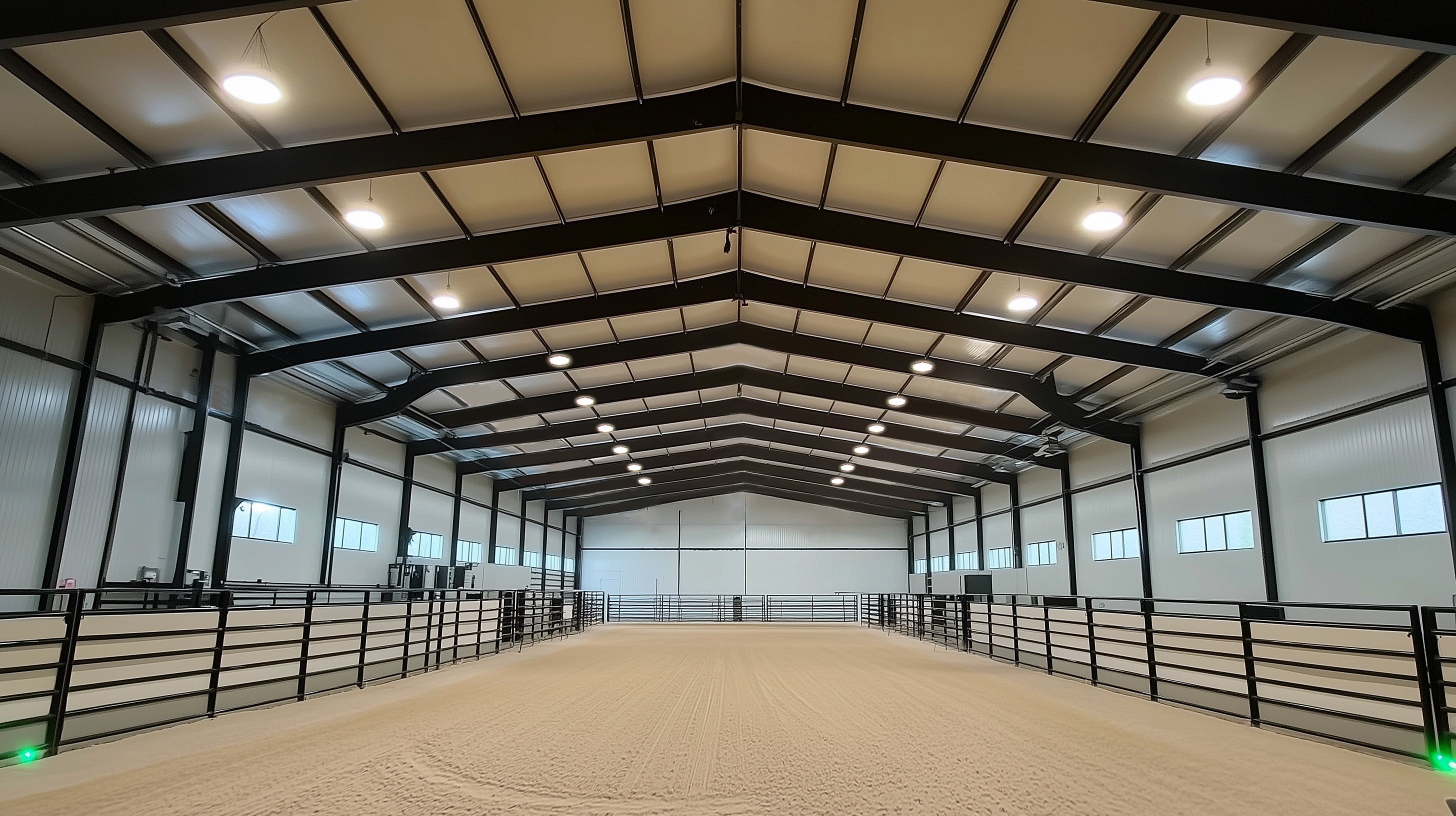
To demonstrate the practical impact of upgrading to flicker-free, high-efficiency lighting, we modeled a typical 10,000 sq. ft. community sports arena. This facility operates 6,000 hours annually and currently uses legacy 400W metal halide fixtures.
Modeling Parameters & Assumptions
The following model compares the legacy system against a high-performance LED retrofit (150W fixtures) including occupancy sensors and utility rebates.
| Parameter | Value | Unit | Rationale / Source |
|---|---|---|---|
| Legacy System Watts | 458 | W | 400W MH + ballast losses |
| LED System Watts | 150 | W | High-efficacy sports LED |
| Fixture Count | 60 | qty | Standard 10,000 sq. ft. layout |
| Annual Operating Hours | 6,000 | hrs | Extended tournament/training use |
| Electricity Rate | 0.18 | $/kWh | US Average Commercial Rate |
| Utility Rebate (DLC Premium) | 130–220 | $ | Per fixture (Source: DLC QPL) |
Quantitative Results
- Annual Energy Savings: ~$19,958 (based on a 308W reduction per fixture).
- Annual Maintenance Savings: ~$6,975 (eliminating MH lamp and ballast replacements).
- HVAC Cooling Credit: ~$940 (reduced heat load from more efficient lighting).
- Estimated Payback Period: ~0.37 years (less than 5 months when accounting for rebates).
Logic Summary: This deterministic model assumes constant electricity rates and linear savings. Actual ROI may vary based on local utility programs and labor costs. The rapid payback is primarily driven by the high usage hours and the massive wattage gap between HID and LED.
Compliance Standards and Verifiable Data
To ensure a "Pro-Grade" installation, facility managers should demand specific documentation. This bridges the gap between marketing claims and verifiable performance.
DLC Premium and Energy Rebates
The DesignLights Consortium (DLC) Qualified Products List (QPL) is the primary database for high-performance lighting. For sports facilities, targeting the DLC Premium tier is essential. Premium fixtures must meet stricter efficacy and lumen maintenance standards, which often translates to higher utility rebates. In many jurisdictions, a DLC Premium listing is a prerequisite for any financial incentive.
LM-79 and LM-80 Reports
- IES LM-79: This is the "performance report card." It verifies the total lumens, efficacy (lm/W), and color rendering index (CRI). For sports, a CRI > 80 is recommended to ensure clear visibility of team colors and court markings.
- IES LM-80: This report tracks lumen maintenance over time (typically 6,000+ hours). Combined with IES TM-21 calculations, it allows engineers to project the $L_{70}$ life (the point where the light drops to 70% of its original output). For high-ceiling arenas, where maintenance requires expensive lift rentals, a projected life of 50,000–100,000 hours is vital for long-term ROI.
Safety Certifications: UL vs. ETL
Every fixture must carry a safety mark from a Nationally Recognized Testing Laboratory (NRTL). Whether it is UL Listed per UL 1598 or ETL Listed, both signify that the product meets North American safety standards for electrical and thermal performance. This is the first verification point for building inspectors and insurance providers.
Implementation Checklist for Facility Managers
When planning a lighting upgrade for an indoor sports space, follow these pragmatic steps to avoid stroboscopic flicker and ensure compliance:
- Request IES Files: Ensure the manufacturer provides .ies files for use in lighting design software like AGi32. This allows you to simulate Lighting Uniformity and ensure no dark spots exist on the court.
- Verify SVM and PstLM: Ask for a flicker report. If the manufacturer cannot provide SVM data, it is a red flag that the driver may not be optimized for high-speed sports.
- Check Dimming Compatibility: If using 0–10V dimming, ensure the sensors and wall controllers are compatible with the driver's dimming curve.
- Confirm IK Ratings: Sports venues are high-impact environments. Ensure fixtures have an appropriate IK Impact Rating (typically IK08 or higher) to survive stray balls.
- Audit for IP65: Even for indoor gyms, an IP65 Rating (dustproof and water-resistant) ensures that the internal components are protected from dust accumulation, which can cause overheating and premature driver failure.
Achieving a Professional Athletic Environment
Fixing stroboscopic flicker is about more than just "turning on the lights." It requires a technical commitment to driver quality, control compatibility, and adherence to industry standards. By prioritizing metrics like SVM < 0.4 and demanding DLC Premium certification, facility managers can create an environment that supports athlete health, enhances the fan experience, and delivers a massive return on investment.
For further guidance on optimizing your facility, consider Designing a High Bay Layout that prioritizes both safety and performance.
Disclaimer: This article is for informational purposes only and does not constitute professional electrical engineering or medical advice. Always consult with a licensed electrician and follow local building codes (NEC/ASHRAE) for any lighting installation or retrofit project.


