

The Stroboscopic Risk: Why Placement Matters in Gym Lighting
The intersection of high-output industrial lighting and high-velocity cooling fans creates a specific technical challenge known as the stroboscopic effect. In a fitness environment, this isn't merely an aesthetic nuisance; it is a safety hazard that can compromise depth perception during complex movements or, in extreme cases, trigger medical episodes.
When a fan blade passes between a light source and the floor, it momentarily interrupts the light path. If the frequency of this interruption aligns with the movement of an athlete—such as the rotation of a jump rope or the cadence of a treadmill—it can create a "stop-motion" visual artifact. To ensure a safe, high-performance workout environment, facility managers and DIY enthusiasts must adhere to precise spatial heuristics and technical standards.
According to the 2026 Commercial & Industrial LED Lighting Outlook: The Guide to Project-Ready High Bays & Shop Lights, modern industrial lighting design now prioritizes visual comfort and flicker mitigation alongside raw lumen output.
Understanding the Physics of Light Interruption
The stroboscopic effect occurs when the "chopping" frequency of the fan blades interacts with the human eye's persistence of vision. In professional gym settings, where fans often operate at high speeds (e.g., 200 RPM), the resulting frequency can fall into sensitive ranges.
Frequency and Biological Impact
Research into sensory experiences suggests that specific strobe frequencies can have hypnotic or disorienting effects. Frequencies between 8–12Hz (the alpha wave range) or 3–7Hz (the theta range) are particularly noted for creating dreamlike or hypnotic sequences. While these might be desirable in a digital art installation, they are dangerous in a gym where athletes are tracking fast-moving objects or performing Olympic lifts.
More critically, the strobe effect caused by a ceiling fan may cause a seizure or other medical episode for those with photosensitive epilepsy. Factors such as the number of blades, their color, and the material of the fan influence how light interacts with the system, but the primary driver of the "flicker" sensation is the physical placement of the light fixture relative to the fan's rotational plane.
The Mechanism of Shadow Casting
It is a common misconception that the strobe effect only happens directly under the fan. In reality, a light fixture placed too close laterally to a fan will cast a sweeping shadow across the room. This intermittent shadow casting is often more distracting than the direct strobe because it affects the peripheral vision, which is highly sensitive to motion and contrast changes.
Engineering the Solution: The 3-4-Floor Heuristic
To mitigate these risks, professional installers utilize a set of practical heuristics (rules of thumb) derived from pattern recognition in commercial gym retrofits. These are not mandated by building codes like the National Electrical Code (NEC), but they represent industry best practices for visual safety.
1. The Vertical Clearance Rule (3 Feet)
Maintain at least 3 feet (approximately 36 inches) of vertical clearance between the lowest point of the industrial light fixture and the highest point of the fan blade rotation.
- Why this number: This distance allows the light's beam angle (typically 110° to 120° for UFO-style fixtures) to "wrap around" the obstruction to some degree, softening the edges of the shadow.
- How to verify: Measure from the ceiling to the fan blades, then ensure the light fixture's mounting chain or pendant kit is adjusted so the fixture sits at least 3 feet higher than that plane.
2. The Lateral Spacing Rule (4 Feet)
Place industrial fixtures at least 4 feet laterally from the outer diameter of any fan's rotational path.
- Why this number: For a standard 52-inch commercial fan, a 4-foot lateral offset ensures that the primary "hot spot" of the light beam does not intersect with the blades at an angle that creates long, sweeping shadows across the gym floor.
- How to verify: Use a laser measure to mark the fan's center point, add half the fan's diameter (26 inches for a 52-inch fan), plus the 4-foot buffer.
3. The Floor-to-Ceiling Parallax
In facilities with lower ceilings (12–14 feet), the risk of glare increases as fixtures are moved higher to clear fan blades. In these scenarios, installers often transition from UFO-style fixtures to linear high bays, which provide a more rectangular distribution that can be "aimed" between fan rows.

Modeling the "CrossFit Box" Scenario: A Technical Deep Dive
To demonstrate the practical application of these rules, we modeled a common "Value-Pro" scenario: a 2,400-square-foot (60x40ft) functional fitness facility with 14-foot ceilings.
Modeling Note (Method & Assumptions)
This analysis uses a deterministic parameterized model based on the Zonal Cavity Method and standard IES-recommended light levels for professional gymnasiums.
| Parameter | Value | Unit | Rationale |
|---|---|---|---|
| Ceiling Height | 14 | feet | Typical converted warehouse/garage gym |
| Target Illuminance | 50–75 | footcandles | IES RP-7 standard for industrial/sports |
| Fan Speed | 200 | RPM | High-speed commercial cooling fan |
| Strobe Frequency | ~6.7 | Hz | Calculated based on 2 blades passing per rev |
| Energy Rate | 0.18 | $/kWh | Average US commercial electricity rate |
Logic Summary: Our model assumes a 14ft mounting height and high-speed fan operation. At 200 RPM, the fan creates a 6.7 Hz interruption frequency. This aligns closely with the 3–7 Hz theta range, which can cause visual discomfort during high-intensity metabolic conditioning.
Economic and Performance Impact
Upgrading to high-efficiency LED fixtures (achieving up to 150 lumens per watt) does more than just fix the strobe effect; it fundamentally alters the facility's operating budget.
| Metric | Estimated Value | Logic / Source |
|---|---|---|
| Annual Energy Savings | ~$2,006 | 12 fixtures reducing wattage from 458W to 200W |
| Annual Maintenance Savings | ~$783 | Elimination of MH lamp/ballast replacements |
| HVAC Cooling Credit | ~$92 | Reduced heat load (0.33 interactive factor) |
| Total Annual Savings | ~$2,881 | Combined energy, maintenance, and HVAC impact |
Based on our scenario modeling, the payback period for such a retrofit is often less than one month after accounting for utility rebates, which are frequently available for products listed on the DesignLights Consortium (DLC) Qualified Products List (QPL).
Compliance and Technical Standards: The "Solid" Foundation
For professional gym managers, lighting is a matter of building code and insurance compliance. Choosing fixtures that meet rigorous safety standards is the first step in risk mitigation.
UL 1598 and UL 8750
Every fixture installed in a commercial gym should carry a UL 1598 certification, which is the core safety standard for fixed luminaires. For LED products specifically, UL 8750 governs the safety of the LED drivers and light engines. These certifications ensure the product won't cause electrical fires or structural failures under normal operating temperatures, which can range from -22°F to 113°F in unconditioned warehouse gyms.
Energy Codes: Title 24 and IECC 2024
In jurisdictions like California, the Title 24 Building Energy Efficiency Standards mandate strict lighting power densities (LPD) and the use of occupancy sensors. Newer standards, such as IECC 2024, further push for daylight harvesting and automated controls. High-performance fixtures with 0-10V dimming capabilities allow facility managers to meet these codes while maintaining the flexibility to dim lights during yoga classes or brighten them for competitions.

DIY Guide: Safe Installation for Home Gyms
For the home gym enthusiast, the technical requirements are the same, but the installation process is often simplified. However, "Plug & Play" convenience should never override safety principles.
The "1-Minute" Installation Trap
Many UFO-style lights offer a 120V plug-and-play design that allows for installation in under a minute using a standard US hook and safety rope. While this is efficient, DIYers often neglect the safety rope or mount the fixture too close to the fan because it's the easiest spot to reach.
Pro Tip: Always use the included safety rope. In a gym environment, vibrations from heavy equipment or jumping can loosen mounting hooks over time. The safety rope is your secondary fail-safe.
Choosing the Right CCT (Color Temperature)
For home workshops and gyms, the choice between 4000K and 5000K is a common debate on forums like Garage Journal.
- 5000K (Daylight): Preferred for high-intensity areas and product photography. It provides high contrast and helps athletes stay alert.
- 4000K (Neutral White): Better for multi-purpose spaces where a slightly warmer, more "natural" feel is desired.
Regardless of CCT, ensure the product complies with ANSI C78.377 to guarantee color consistency across multiple fixtures.
Verification: The Smartphone "Slow-Mo" Test
Even with perfect measurements, on-site verification is essential. Professional installers use a simple, non-obvious technique to detect subclinical strobe effects that aren't visible to the naked eye.
- Set your smartphone camera to "Slow Motion" mode (typically 240fps).
- Point the camera at the floor area where athletes will be moving, ensuring both the fan and the light source are in the periphery or reflected on the floor.
- Review the footage. If you see dark bands "rolling" across the screen or a heavy pulsing sensation, the stroboscopic effect is present.
- Adjust the fan speed. Sometimes, shifting from "High" to "Medium" on the fan controller can move the interruption frequency out of a resonant range with the light's driver frequency.
Long-Term Reliability: LM-80 and TM-21
A "Solid" lighting investment is measured in years, not months. When evaluating high-bay fixtures, look beyond the "50,000-hour" marketing claim.
- LM-80 Reports: These represent the actual lab testing of the LED chips over 6,000+ hours to measure lumen depreciation.
- TM-21 Calculations: This is the mathematical method used to project those LM-80 results into a long-term lifespan (e.g., L70 at 60,000 hours).
A reputable manufacturer will provide these reports upon request, proving that the fixture's brightness won't fade significantly within the first few years of heavy gym use. This data is the backbone of any 5-year warranty claim.
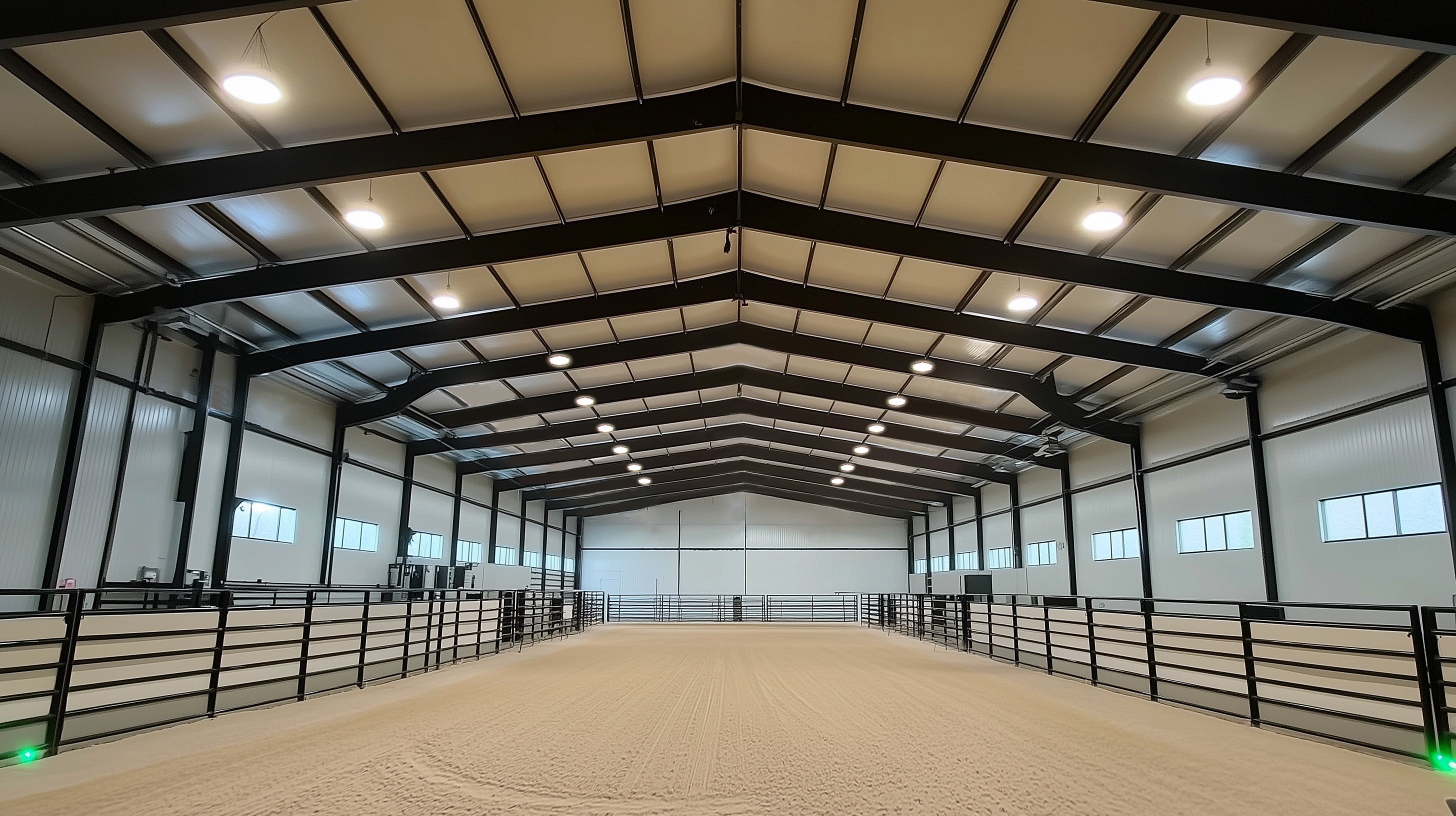
Summary Checklist for Gym Lighting
| Action Item | Technical Requirement | Verification Tool |
|---|---|---|
| Vertical Gap | >3 Feet clearance | Tape Measure |
| Lateral Gap | >4 Feet from fan diameter | Laser Measure |
| Safety | UL 1598 / UL 8750 Listed | UL Product iQ Database |
| Efficiency | DLC 5.1 Premium (135+ lm/W) | DLC QPL |
| Visual Check | Flicker-free at 240fps | Smartphone Camera |
By strictly adhering to these spatial and technical standards, gym owners can eliminate the dangerous strobe effect, ensuring their facility remains a safe, motivational, and professional-grade environment for every athlete.
Disclaimer: This article is for informational purposes only and does not constitute professional electrical or engineering advice. Always consult with a licensed electrician and adhere to local building codes (NEC/NFPA 70) before performing any electrical installation or modification. Visual safety requirements may vary based on specific athletic activities and individual sensitivities.
References
- DesignLights Consortium (DLC) Qualified Products List
- UL Solutions Product iQ Database
- IES LM-79-19: Optical and Electrical Measurements of Solid-State Lighting Products
- ASHRAE Standard 90.1-2022: Energy Standard for Sites and Buildings
- California Title 24, Part 6: Building Energy Efficiency Standards
- National Electrical Code (NEC) Overview


