

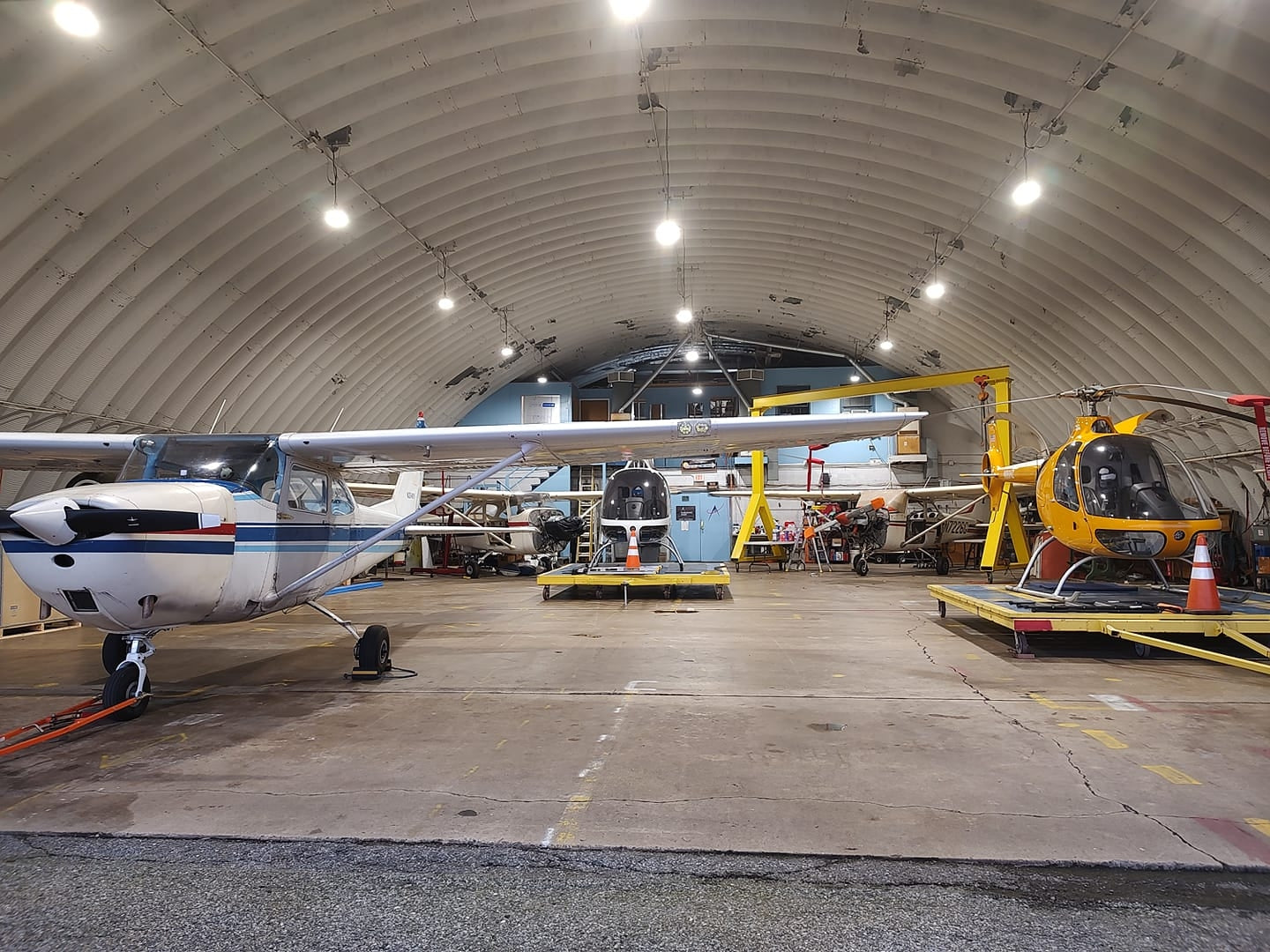
Operational efficiency in high-ceiling environments—such as warehouses, manufacturing plants, and aircraft hangars—is often compromised by a silent but persistent adversary: environmental ingress. For facility managers and industrial contractors, the transition to Light Emitting Diode (LED) technology is typically driven by energy savings. However, a deeper analysis reveals that the primary driver of long-term Return on Investment (ROI) is the elimination of maintenance cycles caused by dust, insects, and cobwebs.
The decision to install sealed, circular high-bay fixtures (commonly referred to as UFO high bays) rather than open-frame legacy systems typically results in a simple payback period of less than three months when maintenance avoidance is factored in. According to data from the U.S. Department of Energy (DOE) Federal Energy Management Program (FEMP), high-efficiency industrial luminaires must not only meet strict lumens-per-watt (lm/W) thresholds but also demonstrate durability in harsh environments.
The Hidden Cost of "Open" Lighting Systems
Legacy High-Intensity Discharge (HID) lamps and open-frame fluorescent fixtures act as thermal magnets for insects. In high-ceiling facilities, the heat generated by these lamps, combined with the lack of a physical barrier, leads to rapid accumulation of biological debris within the optical chamber. This "bug graveyard" effect does more than create an aesthetic nuisance; it significantly degrades the Delivered Lumens (the actual light reaching the work surface).
Lumen depreciation in open fixtures is often non-linear. While the lamp itself may follow a standard decay curve, the accumulation of dust and cobwebs on the reflector and lens can reduce light output by 20% to 30% within the first 24 months of operation. For a 50,000-square-foot facility, this necessitates over-specification of the initial lighting layout to compensate for future loss, or expensive annual cleaning cycles.

Engineering the Seal: IEC 60529 and IP65 Standards
The benchmark for a "sealed" fixture is defined by the International Electrotechnical Commission (IEC) under standard IEC 60529, which establishes Ingress Protection (IP) ratings. For industrial lighting, an IP65 rating is the professional standard.
The rating is broken down into two digits:
- First Digit (6): Dust-tight. No ingress of dust; complete protection against contact.
- Second Digit (5): Protection against water jets. Water projected by a nozzle (6.3 mm) against the enclosure from any direction shall have no harmful effects.
While many consumer-grade lights claim "water resistance," seasoned specifiers look for verified IP65 certification to ensure the fixture is fully sealed against the fine particulates found in woodworking shops or the high humidity of agricultural barns. A common field failure point in lower-quality fixtures is the gasket. Professional-grade sealed fixtures utilize mechanically captured silicone gaskets rather than glued Ethylene Propylene Diode Monomer (EPDM) gaskets. Silicone maintains its compression and seal integrity through thousands of thermal cycles (turning the light on and off), whereas inferior materials may brittle and crack, allowing pests and moisture to enter the driver compartment.
Quantifying the ROI: Maintenance Avoidance and Energy Efficiency
In a simulation of a 50,000-square-foot facility operating 24/7, the financial impact of switching from 400W metal halide fixtures to 150W IP65-sealed LED high bays is transformative. The following data, derived from real-world retrofit scenarios, illustrates the breakdown of annual savings.
| Metric | Legacy HID (400W) | Sealed LED (150W) | Annual Savings |
|---|---|---|---|
| System Power Draw | 458 Watts | 150 Watts | 308 kW Reduction |
| Energy Cost ($0.16/kWh) | $64,193 | $21,024 | $43,169 |
| Maintenance (Lamp/Labor) | $21,900 | $0 | $21,900 |
| HVAC Cooling Credit | Base | -$1,626 | $1,626 |
| Total Operating Cost | $86,093 | $19,398 | $66,696 |
Note: Maintenance savings assume 1.095 lamp replacements per fixture annually at $145 per occurrence (parts + labor/lift rental). HVAC credit assumes a 0.33 interactive factor where reduced lighting heat lowers cooling demand.
Applying these figures, the simple payback period for a 100-fixture project is approximately 0.195 years (roughly 2.3 months), assuming standard utility rebates are applied. This rapid ROI is primarily driven by "Maintenance Avoidance." By eliminating the need for scissor lifts and electricians to clean out bugs or replace blown ballasts, the facility manager preserves operational uptime and reduces safety risks associated with working at heights.
Thermal Management and Component Longevity
A common misconception is that a sealed fixture will overheat because it lacks "breathing" holes. In reality, high-quality sealed LEDs rely on advanced material science for heat dissipation. The use of cold-forged aluminum housings is superior to standard die-cast aluminum. Cold forging creates a denser grain structure in the metal, which improves thermal conductivity.
When evaluating a sealed fixture, a "rule of thumb" for engineers is to measure the heatsink temperature using a thermal gun. At full load, the heatsink should not exceed 15°C above the ambient room temperature. If the housing is poorly designed, the heat trapped inside the sealed chamber will cause the LED driver's electrolytic capacitors to dry out, leading to premature flickering or failure.
To verify longevity, buyers should request the IES LM-80 report (Lumen Maintenance Testing) and the IES TM-21 report (Lifetime Projection). These documents provide the mathematical proof that a fixture will maintain at least 70% of its initial light output ($L_{70}$) over its rated life, typically 50,000 to 100,000 hours. Without these reports, a "50,000-hour" claim is merely marketing.
Compliance Frameworks: UL, DLC, and Energy Codes
For commercial and industrial projects, compliance is not optional. It is the first point of verification for building inspectors and insurance providers.
UL 1598 and Safety
Every fixture must be UL Listed or ETL Listed to standard UL 1598. This standard covers "Luminaires" and ensures the product will not pose a fire or shock hazard under normal operating conditions. In B2B procurement, an unlisted fixture is a significant liability that can void insurance policies in the event of a facility fire.
DLC Premium and Rebates
The DesignLights Consortium (DLC) maintains a Qualified Products List (QPL) that serves as the gateway to utility rebates. To achieve DLC Premium status, a high-bay fixture must demonstrate higher efficacy (lm/W) and better lumen maintenance than the "Standard" tier. Many utility companies, such as Con Edison or Duke Energy, offer "Midstream" rebates that can cover up to 50% of the fixture cost, provided the SKU is found on the DLC QPL.
Energy Codes: ASHRAE 90.1 and Title 24
Modern building codes, including ASHRAE Standard 90.1-2022 and California Title 24, now mandate more than just efficient lamps. They require integrated controls, such as occupancy sensors and daylight harvesting. A sealed IP65 fixture with an integrated sensor port allows for "plug-and-play" compliance. This prevents energy waste in low-occupancy areas, such as the back aisles of a warehouse, adding an estimated 15% to 30% in additional energy savings.

Practical Implementation and Field Verification
When transitioning to sealed lighting, facility managers should address three specific "gotchas" that often arise during installation:
- The Conduit Ingress Point: Even if a fixture is IP65 rated, pests and moisture can enter the wiring compartment through the conduit. Installers must use liquid-tight connectors and ensure that all conduit knockouts are properly sealed. In dusty environments like grain silos, a failure to seal the conduit can lead to internal dust accumulation that bypasses the fixture's primary gaskets.
- Mounting Height and Photometry: Sealed UFO high bays often feature a 120-degree beam angle. While this provides excellent uniform coverage, it may cause glare in facilities with lower ceilings (under 15 feet). For these applications, adding a polycarbonate or aluminum reflector can help direct light downward and reduce UGR (Unified Glare Rating).
- Flicker-Free Requirements: In manufacturing environments with rotating machinery, "stroboscopic effect" or flicker can be a safety hazard. Ensure the fixture uses a high-quality driver that meets FCC Part 15 requirements for electromagnetic interference (EMI) and provides a flicker-free output, as verified in the IES LM-79 report.
Addressing Common Maintenance Intent
For those managing smaller workshops or DIY garages, the choice between 4000K (Natural White) and 5000K (Daylight) is a frequent point of debate. According to ANSI C78.377-2017, which defines chromaticity standards, 5000K is generally preferred for task-intensive environments where high visual acuity is required, such as electronics repair or automotive detailing. Conversely, 4000K is often cited by users in professional forums as being more comfortable for long-term occupancy, reducing eye strain during 8-to-10-hour shifts.

Strategic Summary for Decision Makers
The shift toward sealed IP65 lighting represents a move from "reactive" to "proactive" facility management. By selecting fixtures that are dust-tight and bug-proof, organizations eliminate the secondary costs of lighting—labor, lift rentals, and lumen loss—that often exceed the cost of the electricity itself.
When specifying your next retrofit, prioritize the following checklist:
- Verify IP65 Certification: Ensure the entire fixture, including the driver compartment, is sealed.
- Confirm DLC Premium Listing: Maximize ROI through utility rebates.
- Check Thermal Specs: Look for cold-forged aluminum and a 5-year warranty with a clear return policy.
- Demand Documentation: Do not accept a fixture without an LM-79, LM-80, and UL certificate.
By adhering to these technical standards, facility managers can achieve a "set and forget" lighting system that maintains its peak performance and cleanliness for a decade or more, regardless of the environment's dust or insect activity.
Disclaimer: This article is for informational purposes only and does not constitute professional electrical, legal, or financial advice. All electrical installations should be performed by a licensed professional in accordance with the National Electrical Code (NEC) and local building regulations.


