

Choosing between a hardwired connection and a plug-and-play setup for high-ceiling industrial lighting is a decision that dictates your project's total cost of ownership (TCO), long-term safety, and legal compliance. While a plug-in option offers immediate speed, a hardwired installation often provides the permanence required for commercial code adherence.
In our experience auditing industrial retrofits, the most effective approach depends on the existing electrical infrastructure. For professional facilities, we generally recommend hardwired connections to leverage 277V commercial circuits and ensure compliance with the National Electrical Code (NEC). Conversely, for smaller workshops or temporary setups, plug-in fixtures provide a "Value-Pro" balance of performance and flexibility.
The Hardwired Standard: Commercial Reliability and Code Compliance
For facility managers and contractors, hardwiring is the benchmark for industrial lighting. This method involves connecting the fixture directly to the building’s electrical system via conduit and junction boxes.
1. Voltage Versatility (120V–277V)
Most professional-grade LED high bays are designed with a wide-range driver. In commercial environments, 277V circuits are standard because they allow for more fixtures per circuit and reduced wire size. Hardwiring allows you to tap directly into these 277V lines without the need for step-down transformers, simplifying your layout and reducing hardware costs.
2. Adherence to UL 1598 and NEC
Permanent installations are governed by strict safety standards. According to UL 1598 - Luminaires, fixed luminaires must be installed in a manner that prevents mechanical strain on electrical connections. Hardwiring through a properly rated junction box ensures that the fixture is a recognized part of the building’s structure, which is critical for passing electrical inspections and maintaining insurance coverage.
3. Total Cost of Ownership (TCO) Advantages
While the initial labor cost for a hardwired installation is higher—requiring a licensed electrician—the long-term ROI is superior. By eliminating external plugs and outlets, you remove potential points of failure (such as loose plugs or corroded contacts) that are common in high-vibration warehouse environments.

The Plug-and-Play Strategy: Speed and DIY Flexibility
Plug-in installations are the preferred choice for residential workshops, pole barns, and small-scale manufacturing where electrical flexibility is prioritized over permanent infrastructure.
1. The "3-Minute" Installation
The primary draw of a plug-in system is the drastic reduction in downtime. Most fixtures in this category come equipped with a standard 5-foot power cord and a NEMA 5-15P plug. For a skilled DIYer, this means the difference between a weekend project and a multi-day electrical overhaul.
2. Portability and Maintenance
If your facility layout changes frequently, plug-in fixtures allow you to relocate lighting without re-running conduit. This is particularly useful in "flex-spaces" or leased buildings where you may want to take your lighting investment with you at the end of a lease.
3. Common Pitfalls: The "Gotchas" of Plug-in Power
We often see two major mistakes in plug-in setups:
- Circuit Overload: A common 150W high bay draws about 1.25A at 120V. On a standard 15A circuit, you might assume you can run 12 lights. However, the NEC requires a 20% safety margin for "continuous loads" (anything running over 3 hours), effectively limiting that 15A circuit to 12A. Adding power tools or a compressor to the same circuit will frequently trip breakers.
- Voltage Drop in Daisy-Chains: If you are daisy-chaining fixtures, the internal wiring (typically 14 or 16 AWG) can cause a noticeable voltage drop over long runs. This results in the fixtures at the end of the line appearing dimmer or flickering, a sensory detail that indicates the driver is struggling to maintain current.

The "Glass Box" Logic: ROI and TCO Analysis
To demonstrate the expertise required for these decisions, we simulated a medium-sized warehouse retrofit. We compared 20 legacy 400W metal halide (MH) fixtures against 150W LED UFO high bays.
| Metric | Legacy (400W MH) | Modern LED (150W) | Impact/Savings |
|---|---|---|---|
| Actual Power Draw | 458W (incl. ballast) | 150W | 308W Saved/Fixture |
| Annual Energy Cost | $5,130 | $1,680 | $3,450 Savings |
| Maintenance Cost | $820 (lamps/ballasts) | $0 | $820 Savings |
| HVAC Cooling Credit | $0 | $178 | Lower heat load |
| Total Annual OpEx | $5,950 | $1,858 | $4,092 Total Saved |
Note: Based on 4,000 operating hours/year at $0.14/kWh. HVAC credit assumes 33% of lighting heat reduction translates to cooling savings.
In this scenario, a hardwired installation costing roughly $180 per fixture (including labor) pays for itself in under 10 months. This rapid ROI is the primary reason professional facility managers prioritize hardwired retrofits over simple lamp replacements.
Technical Deep Dive: Standards and Lifetime Projections
When evaluating fixtures for either connection type, you must look past marketing "fluff" and examine the engineering reports.
LM-79 vs. LM-80: The Performance Grade
- LM-79: This is the "performance report." According to the IES LM-79-19 Standard, this report measures total lumens, efficacy (lm/W), and color rendering. If a manufacturer cannot provide an LM-79 report, their performance claims are unsubstantiated.
- LM-80: This measures "lumen maintenance"—how much light the chips lose over time. We use this data alongside the TM-21-21 Standard to project long-term life. A common industry "lie" is claiming 100,000 hours of life; however, IES standards prohibit projecting beyond 6 times the actual test duration. If the chips were tested for 6,000 hours, the maximum verifiable projection is 36,000 hours ($L_{70}$).
Thermal Management and "Solid" Design
Whether hardwired or plugged in, the longevity of an LED depends on heat dissipation. Professional-grade fixtures use pure aluminum cold-forged housings. This material provides superior thermal transfer compared to cast aluminum, preventing the drivers from overheating. Overheating is the #1 cause of "premature death" in industrial LEDs, often manifesting as a faint buzzing sound or the smell of hot electronics before the unit fails.

Compliance and Rebate Strategy
For B2B projects, the connection method is often dictated by the need for utility rebates.
DLC Premium and Utility Incentives
To qualify for the most aggressive rebates, fixtures must be listed on the DesignLights Consortium (DLC) Qualified Products List (QPL). In many jurisdictions, utilities like Con Edison or PG&E require that rebate-eligible lighting be permanently installed (hardwired) and equipped with controls.
Controls and Energy Codes (ASHRAE 90.1)
Modern energy codes, such as ASHRAE Standard 90.1-2022, mandate automatic shutoff or dimming in warehouse aisles.
- Hardwired Benefit: Allows for integrated 0-10V dimming and centralized control systems.
- Plug-in Benefit: Often relies on individual motion sensors (screw-on or plug-in), which are easier to install for DIYers but may not meet the "networked lighting control" requirements of newer building codes.

Decision Matrix: Which Connection Do You Need?
Use this checklist to determine the most pragmatic path for your facility.
Choose Hardwired If:
- You are operating a commercial warehouse, factory, or gymnasium.
- Your ceiling height is 20 feet or more, making future maintenance difficult.
- You need to comply with California Title 24 or local energy codes.
- You are targeting utility rebates that require permanent installation.
- You have 277V power available and want to maximize circuit efficiency.
Choose Plug-in If:
- You are a DIYer lighting a home garage or personal workshop.
- You are in a temporary or leased space where permanent modifications are restricted.
- Your facility has existing 120V outlets located near the mounting points.
- You prioritize immediate installation speed over long-term code compliance.
- You want the ability to easily swap or move fixtures without hiring an electrician.
Safety Engineering: The Non-Negotiables
Regardless of the electrical connection, physical safety is paramount. High-bay environments are subject to vibrations from HVAC systems, forklifts, and industrial machinery.
- Safety Cables: Always use the included stainless steel safety cable. This acts as a secondary fail-safe should the primary hook or pendant mount fail due to vibration-induced fatigue.
- IP65 Protection: Ensure your fixture is rated for the environment. IEC 60529 (IP Ratings) defines IP65 as "dust-tight" and protected against water jets. This is essential for wash-down areas or dusty woodshops.
- IK08 Impact Resistance: In gyms or low-clearance warehouses, look for an IK08 rating to protect the lens and housing from mechanical impact.
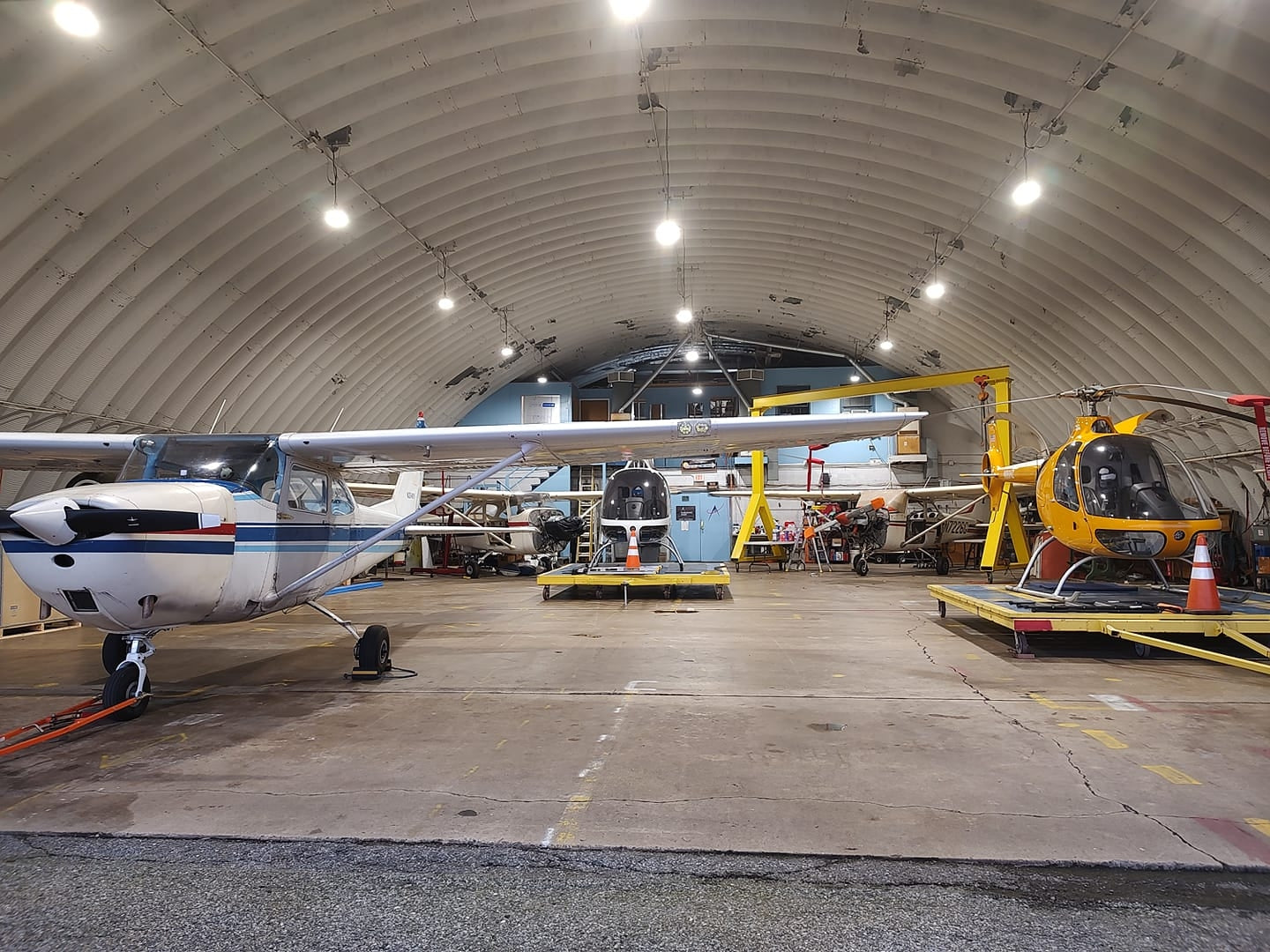
By understanding the technical trade-offs between hardwired and plug-in connections, you can ensure your lighting project is not just "bright," but also "solid" and compliant. For most professional applications, the hardwired path offers the most robust ROI and safety profile, while plug-in options remain a powerful, agile tool for the skilled DIYer.
YMYL Disclaimer: This article is for informational purposes only and does not constitute professional electrical or legal advice. Electrical installations should be performed by a licensed professional in accordance with the National Electrical Code (NEC) and local building regulations. Improper installation can result in fire, injury, or death.


