
Lighting a gym or fitness center is a safety decision as much as a design choice. Members move fast, look up often, and rely on consistent, low-glare light to avoid trips, collisions, and eye strain. This guide provides facility managers, contractors, and gym owners with a technical framework to size high-bay lumens and wattage—specifically for UFO-style LED fixtures—while ensuring compliance with industry recommended practices.
According to the ANSI/IES RP-6-20 standard for Sports and Recreational Lighting, achieving safe visibility requires more than hitting a raw foot-candle (fc) target; it necessitates managing uniformity, vertical illuminance, and visual comfort (glare).
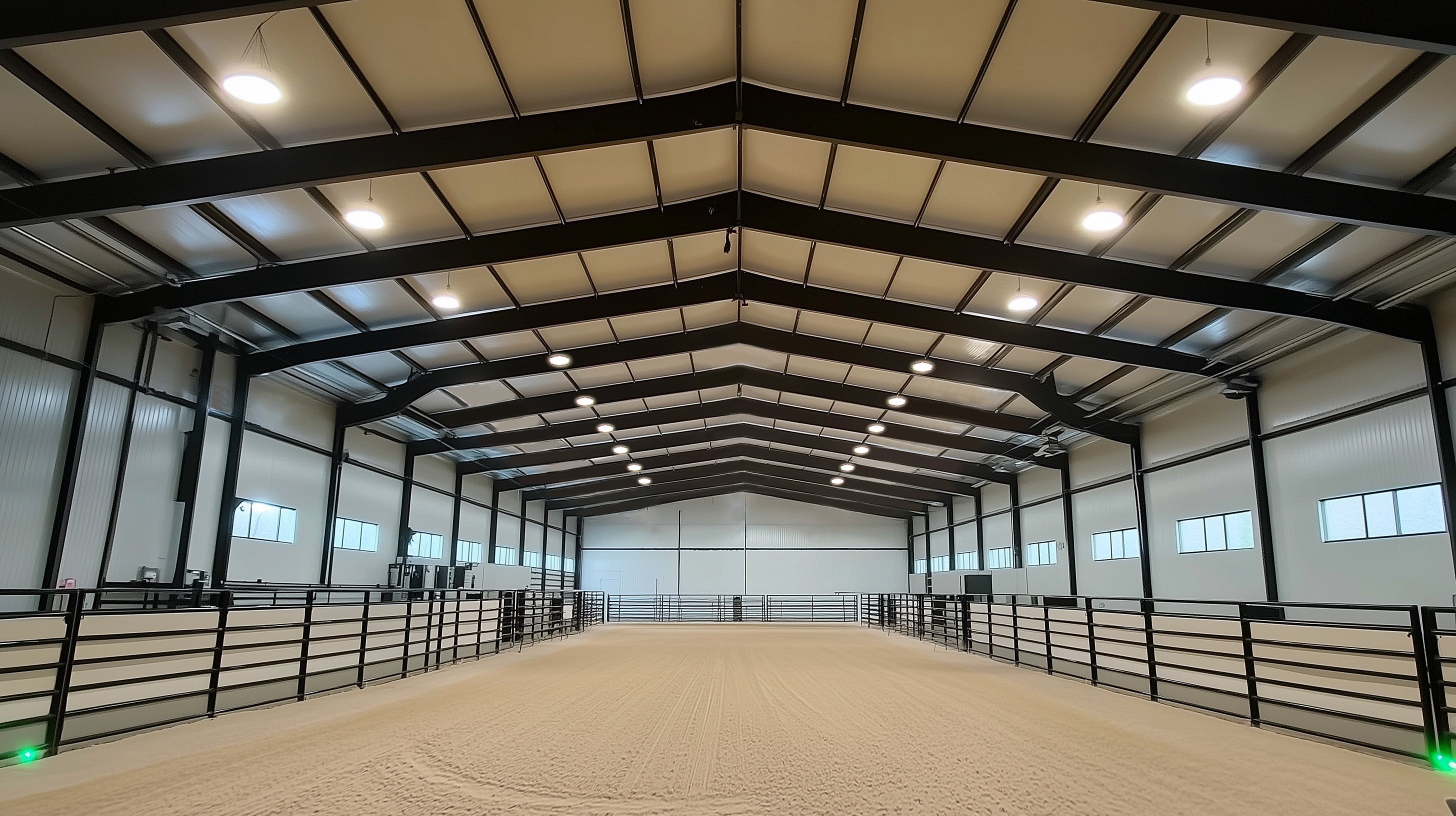
1. Target Illuminance Levels for Gyms and Fitness Centers
1.1 Recommended foot-candles by zone (IES Class IV Recreational)
For professional gym design, the space should be segmented into lighting zones. The targets below reflect "Class IV" recreational standards, which apply to most commercial fitness centers without televised broadcasting requirements.
| Zone / Activity | Recommended Horizontal Illuminance | IES RP-6-20 Context |
|---|---|---|
| Studios, Yoga, Recovery | 20–30 fc (≈ 215–325 lux) | Low-intensity, high-comfort focus. |
| Weight Rooms & Cardio | 30–50 fc (≈ 325–540 lux) | General fitness and machine safety. |
| Courts (Basketball/Volleyball) | 50–75 fc (≈ 540–800 lux) | High-speed tracking and safety. |
Regional & Competitive Variations:
- Professional/Televised (Class I & II): Facilities hosting sanctioned tournaments or broadcasts require significantly higher levels (100–150+ fc) and stricter uniformity. Reference IES RP-6-20 Section 16 for these specific vertical and horizontal grids.
- Local Compliance: Jurisdictions like California (Title 24, Part 6) may have stricter Lighting Power Density (LPD) limits that require high-efficacy luminaires and mandatory multi-level controls.
1.2 Horizontal vs. Vertical Illuminance
In active sports environments, horizontal foot-candles on the floor are secondary to vertical illuminance—the light hitting a player’s face or a moving ball at eye level.
- Target: Aim for vertical levels that are 50–70% of the horizontal target.
- Verification: Measure vertical lux at approximately 5 ft (1.5 m) above the finished floor in functional training zones.
2. Calculated Lumen Requirements: The Heuristic Method
2.1 The "Maintenance-First" Formula
To ensure a gym remains safe throughout the life of the LED system, designs must account for "Light Loss Factors" (LLF). A common engineering mistake is designing for "Day 1" brightness, which inevitably decays.
Total Lumens Required ≈ Target fc × Area (ft²) × LLF
Based on typical gym environments (moderate dust, 50,000-hour L70 ratings), we use a Practical Design Heuristic of 1.45. This is derived from the following assumptions:
- LLD (Lamp Lumen Depreciation): 0.85 (End-of-life output)
- LDD (Luminaire Dirt Depreciation): 0.90 (Typical gym cleaning cycle)
- RCAF (Room Cavity Absorption Factor): 0.95 (Inter-reflections)
- Calculation: 1 / (0.85 × 0.90 × 0.95) ≈ 1.38, rounded to 1.45 for safety margin.
2.2 Worked Example: 6,000 ft² Weight/Cardio Zone
- Target: 40 fc average.
- Area: 6,000 ft².
- LLF: 1.45.
- Total Lumens: 40 × 6,000 × 1.45 = 348,000 initial lumens.
If using a standard 150W UFO High Bay (verified at 22,000 lumens via IES LM-79-19 report):
- Fixture Count: 348,000 / 22,000 ≈ 16 Fixtures.
2.3 Engineering Field Data: Pre- vs. Post-Retrofit (Sample Case)
In a recent 12,000 sq. ft. multi-use gym retrofit (22 ft ceilings), the following data was recorded using a calibrated light meter (NIST traceable):
| Metric | Pre-Retrofit (400W HID) | Post-Retrofit (150W LED) | Improvement |
|---|---|---|---|
| Avg. Horizontal fc | 28 fc | 52 fc | +85% |
| Max:Min Uniformity | 5.2 : 1 | 2.1 : 1 | +60% |
| Vertical fc (at 5ft) | 12 fc | 34 fc | +183% |
| Total System Watts | 14,400 W | 4,800 W | -66% |
3. Selecting Lumens and Wattage by Mounting Height
Ceiling height dictates the "lumen packet" and beam angle required. High-efficacy luminaires should align with DOE FEMP purchasing guidelines (typically >130 lm/W).
| Mounting Height | Suggested Lumen Range | Approx. Wattage | Recommended Beam Angle |
|---|---|---|---|
| 14–18 ft | 10,000–15,000 lm | 80–120 W | 110°–120° (Wide) |
| 18–24 ft | 18,000–24,000 lm | 130–180 W | 90°–110° (Medium) |
| 24–30+ ft | 24,000–30,000+ lm | 180–220+ W | 60°–90° (Narrow) |
4. Spacing, Uniformity, and Glare (UGR)
4.1 Spacing-to-Mounting-Height (S/MH) Ratio
To achieve the IES-recommended uniformity ratio (Max:Min ≤ 3:1), the S/MH ratio should be maintained between 1.0 and 1.2.
- Example: At a 20 ft mounting height, fixtures should be spaced no more than 20–24 ft apart. Spacing fixtures at 1.5× the height (30 ft) will result in "hot spots" and dark zones between equipment.
4.2 Unified Glare Rating (UGR) Targets
Gym members are often in supine positions (bench press, stretching), making glare a major liability.
- General Areas: UGR < 22.
- High-Comfort Areas: UGR < 19 (achieved via frosted lenses or deep-cell reflectors).
- Placement Tip: Avoid placing high bays directly above fixed treadmill banks or weight benches. Offset fixtures to the aisles to provide indirect task lighting.
5. Color Quality: CCT and CRI Standards
Following IES RP-6-20 recommendations, color quality impacts both safety and aesthetics.
- CCT (Correlated Color Temperature): 4000K to 5000K is the industry standard. 4000K is preferred for studios to avoid a "clinical" feel, while 5000K provides the high-energy "daylight" feel preferred for courts.
- CRI (Color Rendering Index): A CRI of 80+ is mandatory for safety and equipment recognition. For facilities with video recording or high-end branding, specify CRI 90+ to ensure accurate skin tones and color vibrancy.
6. Controls and Compliance (ASHRAE 90.1)
Modern facilities must comply with ASHRAE 90.1-2022 or IECC requirements for lighting controls.
- Mandatory Dimming: Most commercial codes require 0-10V dimming to allow for "Daylight Harvesting" near windows.
- Occupancy Sensing: Gym zones should be controlled by occupancy or vacancy sensors.
- The "Safety Floor": Never program sensors to dim below 30% during operating hours. Sudden drops in light levels during a heavy lift or fast-paced game can cause accidents.
7. Practical Design Checklist for Contractors
Before purchasing or installing, verify the following documentation:
- [ ] LM-79 Report: Confirms actual (not "equivalent") lumen output and wattage.
- [ ] TM-21/LM-80 Data: Verifies the L70 lifetime (e.g., L70 > 54,000 hours).
- [ ] .IES File: Essential for running a photometric study in software like AGi32 or DIALux.
- [ ] UGR Rating: Ensure the fixture optics are designed for low-glare applications.
FAQ
Q: Can I use 100W LED high bays to replace 400W Metal Halide? A: Typically, yes. A high-efficacy 100W-120W LED (15,000+ lumens) provides similar "effective" light to a 400W HID, especially when accounting for the LED's higher CRI and better lumen maintenance.
Q: What is the best light for a basketball court? A: For recreational play, aim for 50–60 fc using 5000K fixtures with a CRI of 80+. Ensure the fixtures are impact-rated (IK08 or higher) or protected by wire guards.
Q: How do I calculate exactly how many fixtures I need?
A: Use the formula: (Target fc × Area × 1.45) / Fixture Lumens. For a precise layout, always request a photometric report from your supplier using your specific floor plan.
Safety & Compliance Disclaimer This guide is for informational purposes and does not replace professional engineering advice. Lighting designs must comply with local building codes, NFPA 101 (Life Safety Code) for emergency egress, and regional energy mandates (e.g., CA Title 24). Always consult a licensed electrical engineer for final design approval.