

Ammonia is not merely a nuisance odor in livestock production; it is a potent chemical solvent. For facility managers and agricultural contractors, the presence of ammonia ($NH_3$) represents a persistent threat to the structural integrity of electrical systems. While many specify "waterproof" lighting for barn wash-downs, engineering data suggests that standard waterproof ratings do not account for the unique corrosive pathways of volatile organic compounds (VOCs) found in swine and poultry environments.
In these facilities, the failure of an LED fixture rarely begins with the light-emitting diode itself. Instead, it typically originates at the seals. When ammonia gas penetrates a fixture, it can trigger a cascade of failures: clouding of the lens, corrosion of the driver circuitry, and eventually, critical system failure. To target a 10-year service life in a modern barn, specification must look beyond lumen count and prioritize the material science of gaskets and housings.
This guide provides a technical framework for evaluating ammonia-resistant lighting, grounded in agricultural research and industry-standard performance metrics.
Quantifying the Corrosive Environment: Ammonia Thresholds
Understanding the scale of the hazard is the first step in technical specification. Ammonia concentrations in livestock facilities vary significantly based on ventilation, waste management, and animal density.
According to research published in Sensors (MDPI), ammonia concentrations in pig barns typically range from 1 ppm to 30 ppm, with significant fluctuations tied to humidity and temperature-controlled airflow. In poultry environments, the poultry science community notes that levels should ideally not exceed 25 ppm to protect bird productivity. While these levels are managed for animal health, constant exposure remains a significant challenge for standard industrial materials.
| Environment | Typical $NH_3$ Range | Regulatory/Health Limit | Impact on Standard Lighting |
|---|---|---|---|
| Swine Barns | 1 – 30 ppm | 33 ppm SciOpen | Potential gasket hardening; lens yellowing risks. |
| Poultry Houses | 10 – 25 ppm | 25 ppm ScienceDirect | Risk of corrosion at wire entry points; driver failure. |
| Dairy Facilities | 5 – 15 ppm | Varies | Moisture-ammonia synergy may lead to housing pitting. |
Technical Note: Ammonia is highly water-soluble. In high-humidity barns, it forms ammonium hydroxide, a caustic solution that can degrade copper traces and aluminum housings that lack specialized protective coatings.

The Anatomy of a Failure: Gaskets and Wire Entries
A common oversight in agricultural lighting projects is the assumption that an IEC 60529 (IP65) rating alone is sufficient for ammonia resistance. The IP (Ingress Protection) rating system measures resistance to solid objects and liquid water; it does not specifically test for chemical compatibility with corrosive gases.
A fixture can be watertight but remain susceptible to ammonia molecules. As the fixture undergoes thermal cycling during operation, it can create a vacuum effect that pulls ambient barn air—and ammonia—through the gaskets.
The "Gasket Trap"
Standard LED fixtures often utilize PVC or lower-grade rubber gaskets. Under chemical exposure, these materials may undergo "plasticizer migration," where the chemicals maintaining gasket flexibility are leached out. According to Durlon, this can cause the gasket to degrade, crack, or soften.
- Failure Point 1: The Lens Seal. If the lens gasket fails, ammonia may cloud the internal optics, potentially reducing light output significantly before the LEDs reach their end-of-life.
- Failure Point 2: Wire Entry Glands. This is a frequent ingress point. If the gland does not utilize chemically resistant polymers like EPDM (Ethylene Propylene Diene Monomer) or high-grade silicone, the seal around the power cable may become brittle.
Field Observation: Experienced installers often report that silicone and EPDM offer superior resistance to the specific chemical degradation found in swine barns compared to standard rubber compounds. When reviewing spec sheets, verify explicit mentions of these materials.
Decoding Compliance: Standards for Agricultural Durability
Professional procurement requires verification of independent testing. The following standards are benchmarks for evaluating fixture durability:
- UL 1598 & UL 8750: These are primary safety standards. UL 1598 covers luminaire construction, while UL 8750 focuses on LED equipment. Verification via the UL Solutions Product iQ Database is recommended for any B2B audit.
- DLC 5.1 Premium: The DesignLights Consortium (DLC) sets high bars for efficacy and longevity. A DLC Premium listing indicates the fixture has undergone IES LM-80 testing for lumen maintenance and IES TM-21 for lifetime projection.
- IES LM-79-19: This verifies total lumens, efficacy (lm/W), and color consistency. Without an LM-79 report, performance claims lack third-party validation.
Economic Modeling: ROI and TCO in Harsh Environments
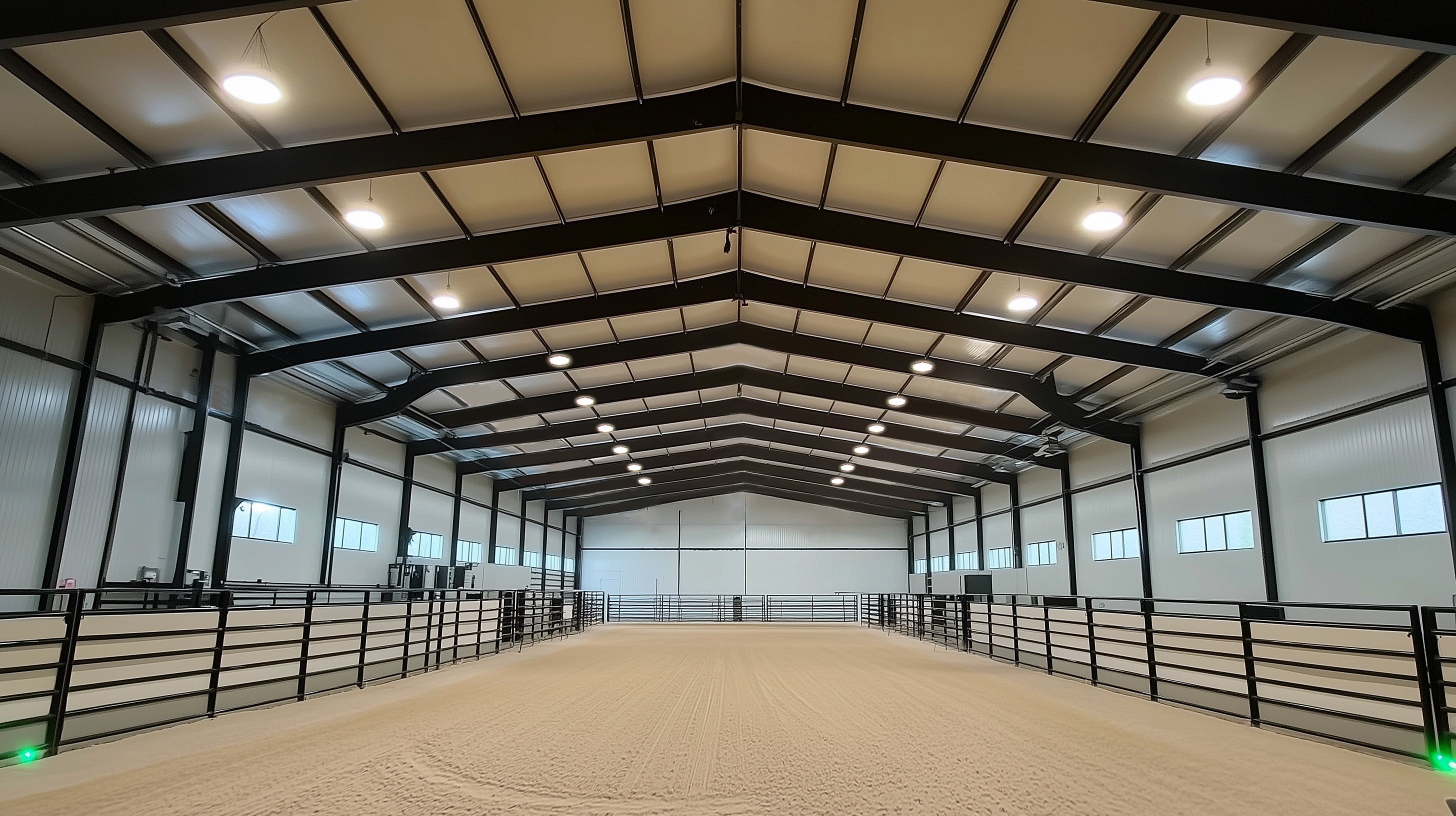
To illustrate the potential value of ammonia-resistant UFO high bays, we have modeled a representative 10-year Total Cost of Ownership (TCO) for a poultry farm operator.
10-Year TCO Representative Model
Scenario: 100-fixture facility replacing 400W Metal Halide with 150W Ammonia-Resistant LED. Operating 24/7 (8,760 hours/year).
| Financial Metric | Estimated Impact (10-Year Horizon) |
|---|---|
| Annual Energy Savings | $32,377 (at $0.12/kWh) |
| Annual Maintenance Savings | $15,330 (estimated labor/material for repairs) |
| HVAC Cooling Credit | $1,045 (estimated reduced heat load) |
| Total Annual Savings | $48,752 |
| Modeled Payback Period | ~5 Months (0.41 Years) |
| Carbon Reduction | 134.6 Metric Tons $CO_2e$ Annually |
Model Assumptions & Sensitivity: This model assumes a fixture cost of approximately $200/unit and labor rates of $65/hour. Actual payback periods will vary based on local utility rates, specific fixture pricing, and existing maintenance cycles. In high-ammonia environments, legacy lamps may experience a 20% reduction in lifespan due to electrode corrosion, which often justifies the initial investment in specialized seals. For broader market context, see the 2026 Commercial & Industrial LED Lighting Outlook.
Engineering for Longevity: Material Selection Heuristics
When specifying UFO high bays for livestock barns, the following material hierarchy is recommended for chemical resilience:
- Housing: Pure aluminum cold-forged housings are often preferred. Cold forging typically provides high thermal transfer efficiency, and the resulting smooth surface can be easier to sanitize, reducing the accumulation of ammonia-rich dust.
- Protective Coating: Aluminum components should be treated with a corrosion-resistant powder coat to mitigate the risk of "white rust" (aluminum oxide) when exposed to ammonium hydroxide.
- Lens Material: Polycarbonate offers high impact resistance (IK08 or higher), but it must be UV-stabilized. In ammonia-rich environments, non-stabilized polycarbonate may become yellowed or brittle over time.
- Gaskets: Prioritize silicone or EPDM; avoid PVC for high-exposure areas.

Strategic Installation: Mitigating Ammonia Stratification
Installation strategy is as critical as hardware selection. Ammonia gas is lighter than air and, when combined with moisture, tends to stratify near the ceiling in barn environments.
The 18-Inch Guideline: Mounting fixtures approximately 12 to 18 inches below the peak of the roofline can help avoid the highest concentrations of ammonia and moisture that accumulate at the structure's apex.
Safety and Compliance:
- Worker Safety: Installers should be aware of OSHA ammonia exposure limits (PEL of 50 ppm as an 8-hour TWA). Ensure proper ventilation during installation in active facilities.
- NEC Compliance: Agricultural wiring must adhere to NFPA 70 (National Electrical Code). Use liquid-tight conduit and sealed junction boxes in areas designated as "Wet Location."
- Controls: For poultry applications, 0-10V dimming is standard for bird welfare. Ensure control circuits are compatible with agricultural controllers.
- Sensors: In storage areas, wireless occupancy sensors can reduce unnecessary burn time.
Strategic Specification Summary
To support long-term performance in high-ammonia environments:
- Verify Gasket Material: Seek silicone or EPDM over PVC to reduce the risk of chemical embrittlement.
- Audit Documentation: Verify UL file numbers and DLC Premium status through official databases.
- Evaluate Thermal Management: Cold-forged aluminum supports the thermal regulation necessary for component longevity.
- Analyze TCO: Use site-specific data to model the ROI of specialized, ammonia-resistant fixtures versus standard industrial alternatives.
By applying these engineering principles, facility managers can implement a proactive lighting strategy designed to withstand the rigors of modern agricultural production.
Disclaimer: This article is for informational purposes only and does not constitute professional electrical engineering or agricultural consulting advice. Always consult with a licensed electrician and follow local building codes (NEC/IECC) and OSHA safety guidelines when installing industrial lighting systems.
References
- Virtual MOS Sensor Array Design for Ammonia Monitoring in Pig Barns (MDPI)
- Ammonia Removal from Broiler Houses (ScienceDirect)
- Ammonia Monitoring in Pig Houses (SciOpen)
- IEC 60529: Ingress Protection Ratings
- UL Solutions Product iQ Database
- DesignLights Consortium (DLC) Qualified Products List
- The Causes of Gasket Failure (Durlon)
- NFPA 70: National Electrical Code (NEC)
- OSHA: Ammonia Refrigeration - Hazards


