

The Critical Role of Durability in Farm Lighting
IP66? IK08? To a farm owner or barn manager, these codes can look like technical jargon. Yet, understanding what they mean is critical for protecting your investment and ensuring safety in demanding agricultural environments. Choosing the wrong light fixture can lead to premature failure from fine dust and moisture, or even safety hazards from impacts in a busy workshop or livestock area.
These ratings are the backbone of fixture durability. While we cover the basics in our general guide on IP vs. IK Ratings, this article translates these essential standards into practical advice specifically for the unique challenges of a farm.
Decoding IP Ratings: Your Shield Against Dust and Water
An Ingress Protection (IP) rating is a universal standard defined by the International Electrotechnical Commission (IEC) in standard 60529. It classifies the degree of protection an electrical enclosure provides against the intrusion of solid objects and moisture.
- First Digit (Solids): Rates protection against solid objects, from fingers down to microscopic dust.
- Second Digit (Liquids): Rates protection against moisture, from dripping water to high-pressure jets.
For agricultural settings, you will almost always see a "6" as the first digit, which signifies the fixture is completely "dust-tight." This is a practical requirement for dusty environments like haylofts or feed mills. The primary decision-making factor is typically the second digit.
A weather-resistant oval wall pack light, demonstrating its suitability for outdoor and wet locations on a farm.
Common IP Ratings for Farm Applications
| Rating | Protection Level | Common Farm Application |
|---|---|---|
| IP65 | Water jets from any direction. | General outdoor areas, equipment sheds, workshops. Can be rinsed with a low-pressure hose. |
| IP66 | Powerful water jets from any direction. | Dairy parlors and any location requiring regular high-pressure wash-downs. |
| IP67 | Temporary immersion (up to 1m). | Areas with a high risk of temporary flooding or troughs. |
Expert Insight: Based on common patterns we see in agricultural support, a high IP rating does not automatically mean chemical resistance. For instance, the gaskets providing an IP66 seal can degrade when exposed to ammonia in livestock barns or harsh dairy cleaning agents. We recommend checking that the fixture material (such as polycarbonate lenses or specialized gaskets) is rated for the specific chemical environment of your facility.
For a deeper look at why dust protection is so vital, our article on IP6X: Why Dust-Tight Lights Are Key for Shops & Barns provides more detail.
Decoding IK Ratings: Measuring Mechanical Toughness
While IP ratings handle the elements, IK ratings measure a fixture's resistance to mechanical impact. Defined in standard IEC 62262, the IK code indicates the impact energy (measured in Joules) a fixture can withstand without the enclosure breaking.
Common IK Ratings and Practical Equivalents
| Rating | Impact Energy (Joules) | Practical Rule of Thumb |
|---|---|---|
| IK07 | 2 Joules | Dropping a 0.5 kg object from 40 cm. |
| IK08 | 5 Joules | Dropping a 1.7 kg object from 30 cm. |
| IK09 | 10 Joules | Dropping a 5 kg object from 20 cm. |
| IK10 | 20 Joules | Dropping a 5 kg object from 40 cm. |
For any area with moving vehicles or animals, we recommend starting at IK08. In high-traffic areas or where fixtures are mounted low, specifying IK09 or IK10 provides a much higher safety margin against accidental collisions. You can learn more in our guide, Choosing IK-Rated Lights for High-Traffic Barns.
Practical Application: Matching Ratings to Farm Zones
The key is to analyze the specific hazards in each part of your operation. Don't over-spec and waste budget, but don't under-spec and compromise safety.
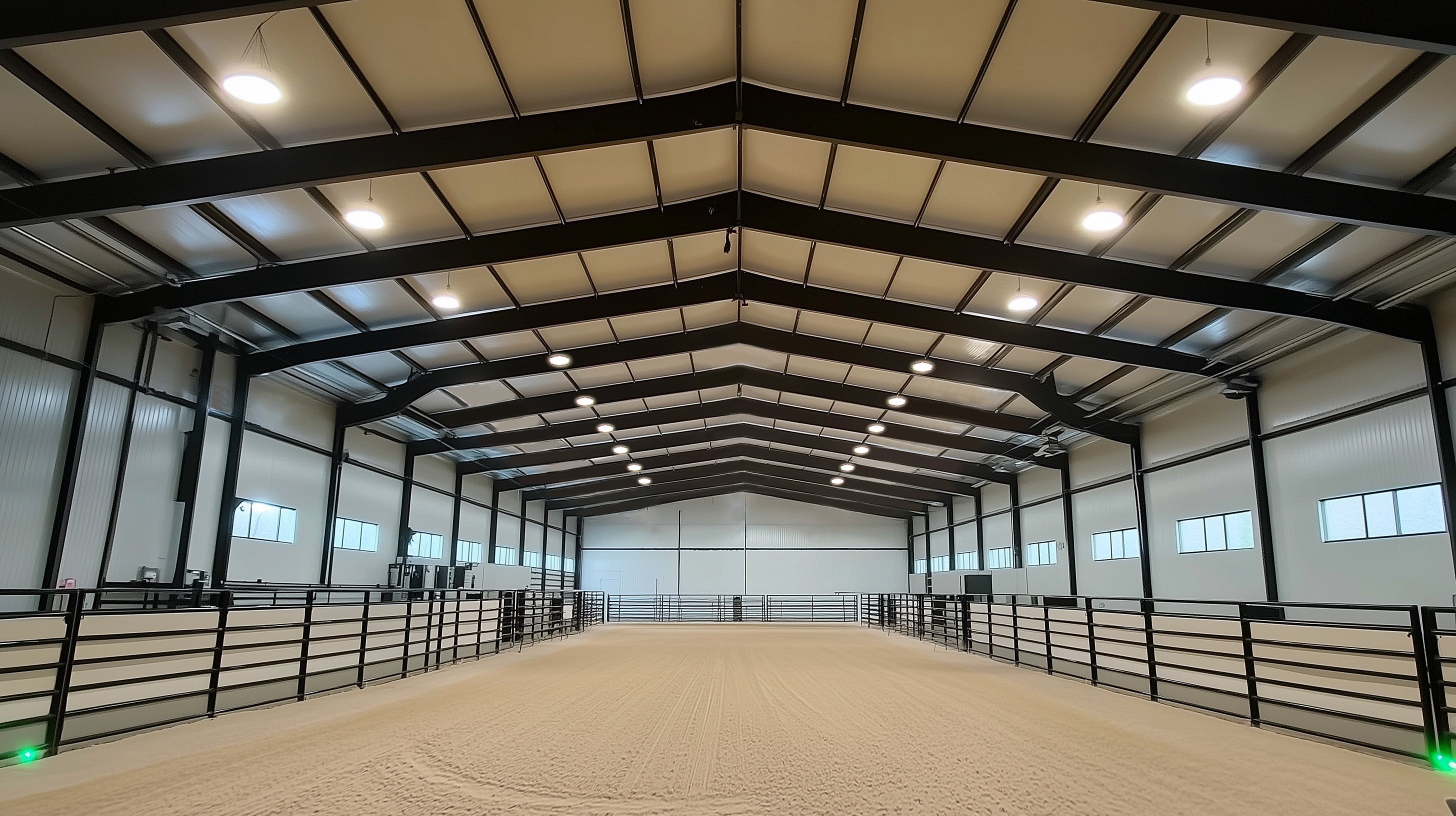
Farm Lighting Decision Framework
| Location | Dominant Hazards | Recommended IP | Recommended IK | Expert Justification |
|---|---|---|---|---|
| Dairy Parlor / Wash Bay | High-pressure water, chemicals. | IP66 | IK08 | Must withstand daily, forceful cleaning. See Why IP65+ Floodlights Are Essential. |
| Livestock Pen / Arena | Airborne dust, impact risk. | IP66 | IK10 | Toughest environment; requires maximum impact resistance for animal safety. |
| Equipment Workshop | Dust, shavings, tool impacts. | IP65 | IK08 | Balanced for busy spaces. See Verifying IP Ratings for Dust. |
| Hayloft / Feed Storage | High fine dust levels. | IP65 | IK07 | Dust-tight seals are critical to prevent internal heat buildup and fire risk. |
| Outdoor Yard & Eaves | Rain, snow, windblown dust. | IP65 | IK08 | Weatherproof and robust enough for ladder or machinery bumps. |
Installation & Maintenance: Protecting Your Investment
⚠️ SAFETY & COMPLIANCE NOTICE: Electrical installations in agricultural settings involve high-voltage systems and unique safety codes (such as NEC Article 547). Always consult a licensed electrician for wiring, mounting, and grounding. Ensure all fixtures carry verifiable third-party certifications (e.g., UL, ETL, or DLC) to confirm they meet the IP/IK ratings claimed by the manufacturer.
Installation Best Practices
- Use Stainless Steel Hardware: Prevents rust and corrosion in damp or chemically-active environments.
- Employ Watertight Connectors: Use correctly-sized, exterior-rated cable glands. A common failure point is moisture entering through the wiring entry because of an improperly sized seal.
- Create Drip Loops: Form a small "U" shape in the cable before it enters the fixture. This forces water to drip off the bottom of the loop rather than running down the cable and into the connection.
- Orient Fixtures Strategically: Mount fixtures so that cable entries face away from prevailing winds and rain.
Long-Term Maintenance & Planning
- Lumen Depreciation Heuristic: In dusty farm environments, we suggest building a 15-25% light loss factor into your initial design. This accounts for the inevitable dust accumulation on lenses between cleanings.
- Cleaning Schedule: A simple wipe-down every 6-12 months can maintain efficiency.
- Spare Inventory: Keeping a small stock (5-10%) of spare fixtures and gaskets minimizes downtime during critical harvest or calving seasons.
Key Takeaways
Choosing the right lighting for your farm is about matching engineering standards to your daily reality.
- IP Rating: Think of it as "weatherproofing." Match the second digit to your moisture exposure (e.g., IP66 for high-pressure washing).
- IK Rating: Think of it as "armor." Use IK08+ for areas with machinery or livestock.
- Verify Certifications: Before purchasing, ask for the manufacturer’s third-party lab test reports to ensure the ratings are independently validated.
- Professional Installation: Always prioritize safety by using a qualified electrician for all agricultural lighting projects.
Frequently Asked Questions (FAQ)
Can I use a pressure washer on an IP65-rated light? It is not recommended. IP65 is tested against standard hose-pressure water. High-pressure power washing requires an IP66 or IP69K rating.
Is there a specific rating for ammonia resistance? No. IP and IK ratings do not cover chemical resistance. You must verify that the fixture uses materials like die-cast aluminum with specialized powder coatings or chemical-resistant polycarbonate lenses.
How do I verify if a rating is legitimate? Check for a UL, ETL, or DLC listing. Reputable manufacturers should be able to provide a test report from an accredited third-party laboratory (such as Intertek or SGS) that explicitly lists the IEC 60529 or IEC 62262 standards.
What happens if I use standard indoor lights in a barn? This is a significant fire and safety hazard. Dust infiltration can cause internal overheating, while moisture can lead to short circuits. Standard lights also lack the mechanical strength to survive accidental impacts, potentially leading to falling glass or debris. Always use fixtures rated for the specific agricultural environment.


