¿NECESITAS AYUDA? ☎ +1(855)688 7879 Hora: 6 a.m.-6 p.m. (PST)

Oferta de actualización de celebración: hasta $100 de descuento

Gym & Fitness Center High Bay Lumen Requirements

Thach Nguyen Ngoc |

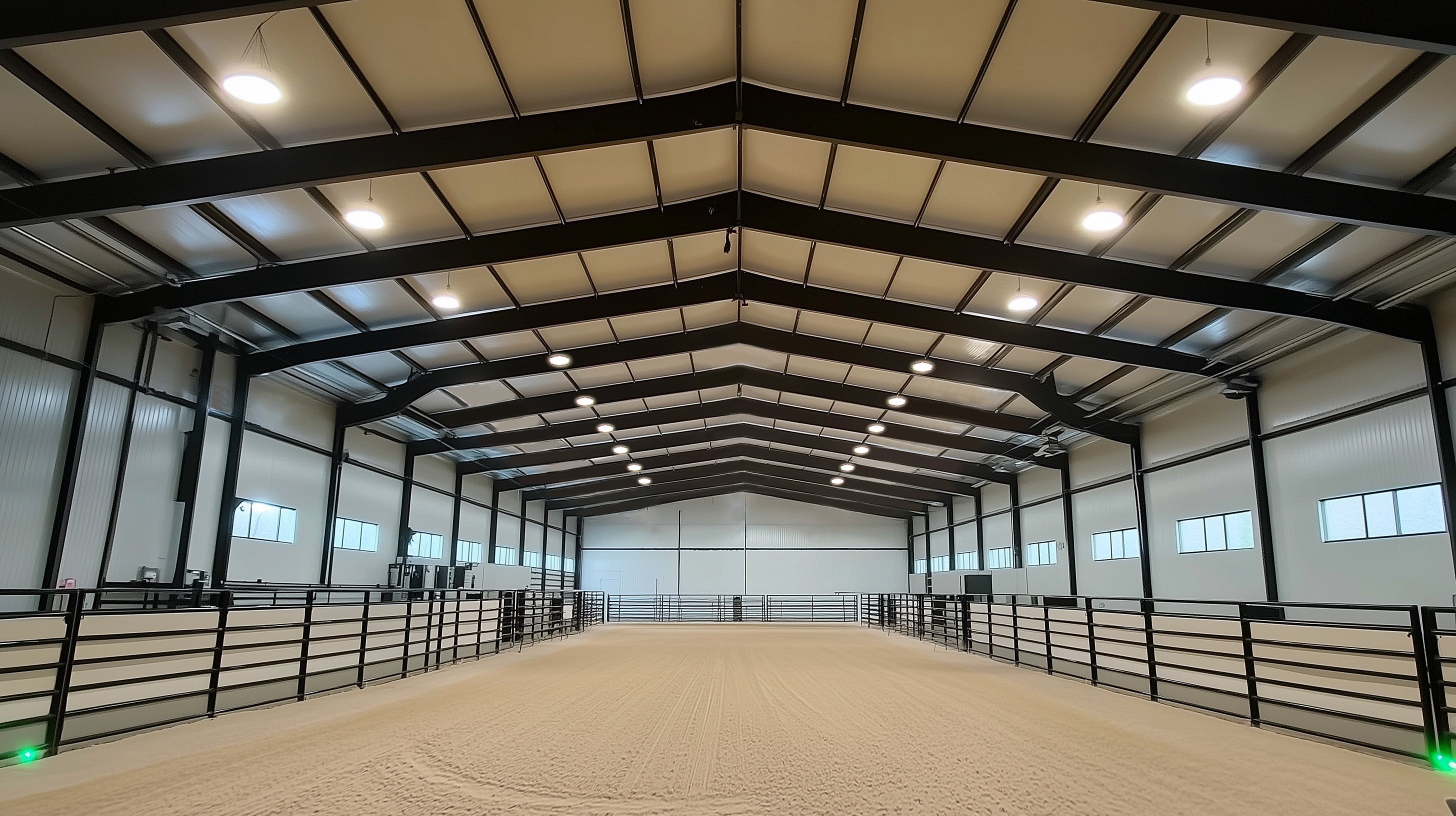
Lighting a gym or fitness center is a safety decision as much as a design choice. Members move fast, look up often, and rely on consistent, low‑glare light to avoid trips, collisions, and eye strain. This guide gives facility managers, contractors, and gym owners a practical framework to size high bay lumens and wattage—specifically for UFO‑style LED high bays—while controlling glare and staying code‑ready.

According to IES sports and recreational guidance summarized in ANSI/IES RP‑6‑20, it is not enough to hit a single foot‑candle number; you must also manage uniformity and visual comfort. The sections below translate that principle into calculator‑ready rules of thumb for gyms.

UFO LED High Bay lights illuminating a high‑ceiling warehouse with exposed wooden trusses

1. Target Illuminance Levels for Gyms and Fitness Centers

1.1 Recommended foot‑candles by zone

For practical gym design, split the space into three main lighting zones instead of using one generic “gym” target.

Zone / activity Recommended horizontal illuminance Typical use cases
Studios, yoga, recovery areas 20–30 fc (≈ 215–325 lux) Stretching, yoga, low‑intensity classes
Weight rooms, cardio, general fitness 30–50 fc (≈ 325–540 lux) Free weights, cardio machines, selectorized strength
Courts, functional / sports training 50–75 fc (≈ 540–800 lux) Basketball, volleyball, functional rigs, HIIT spaces

These ranges align with typical recreational recommendations extracted from IES foot‑candle charts for gyms and courts, as summarized by Electrical Marketplace’s lighting levels guide.

How to use this table in practice:

  • Start with the higher end of each range for new LED projects; dim down via controls later if needed.
  • Use the lower end only for softer environments (yoga, recovery) or where members complain about “too bright” conditions.

1.2 Horizontal vs. vertical illuminance

Horizontal foot‑candles on the floor or bench surface are not enough for active spaces.

As emphasized in ANSI/IES RP‑6‑20 sports guidance, ball sports and fast motion require adequate vertical illuminance at player eye height and on walls/backboards so people can track objects moving through space.

For gyms, this translates to:

  • Check vertical lux at about 5 ft (1.5 m) above finished floor in courts and functional zones.
  • Aim for vertical levels at least 50–70% of the horizontal target so faces and moving equipment remain visible.

If your current layout looks “flat” or members complain they cannot see faces or the ball well even though the floor appears bright, vertical illuminance is usually the missing metric.

2. From Foot‑Candles to Lumens: Fast Sizing Method

2.1 Core formula

A fast way to size high bays without running a full photometric study is to convert your target foot‑candles into total lumens, then divide by fixture output.

Step 1 – Convert target level to lumens:

Total lumens required ≈ Target fc × Area (ft²) × Light‑loss factor

A practical light‑loss factor (LLF) for gyms is 1.4–1.5. This reflects lumen depreciation, dirt buildup, and optical losses. Experience from sports lighting projects and lumen maintenance data summarized with LM‑80 and TM‑21 discussions in RP‑6‑20 commentary shows that if you design exactly at 50 fc at commissioning, in‑service levels can drop to 30–40 fc within several years. Designing in an LLF of ~1.3–1.4 helps maintain safe levels over time.

The extra practitioner guidance in this playbook uses ≈1.45 based on a 0.75 maintenance factor and 0.9 luminaire optical efficiency:

1.45 ≈ 1 / (0.75 maintenance factor × 0.9 light output ratio)

Step 2 – Divide by fixture lumens:

Number of fixtures ≈ Total lumens required ÷ Lumens per fixture

2.2 Worked example: 6,000 ft² weight/cardio zone

  • Space: 6,000 ft² open weight and cardio area
  • Target: 40 fc average (mid‑range of 30–50 fc band)
  • LLF: 1.45 (to maintain levels over life)

Total lumens ≈ 40 fc × 6,000 ft² × 1.45 ≈ 348,000 lumens

Assume you use high bay luminaires around 22,000 lm each (typical of a 150 W, ~140 lm/W UFO high bay verified via LM‑79 photometry as defined in the IES LM‑79 standard).

Number of luminaires ≈ 348,000 ÷ 22,000 ≈ 16 luminaires

You would then refine spacing and aiming (see Section 4), but this gives a reliable starting count.

2.3 Quick reference table: total lumens by area and target fc

Use this table to ballpark lumens for common gym sizes at LLF ≈ 1.45.

Area (ft²) 30 fc (studios) 40 fc (weights/cardio) 60 fc (courts/functional)
3,000 ~130,000 lm ~174,000 lm ~261,000 lm
6,000 ~261,000 lm ~348,000 lm ~522,000 lm
9,000 ~391,000 lm ~522,000 lm ~783,000 lm
12,000 ~522,000 lm ~696,000 lm ~1,044,000 lm

These values already include the 1.45 factor, so they represent initial installed lumens. When choosing a fixture package, confirm the lumen ratings from a trustworthy LM‑79 report rather than relying only on catalog watts.

3. Choosing High Bay Lumens and Wattage by Ceiling Height

3.1 Why “lumens per square foot” alone is risky

A common shortcut is to specify “X lumens per square foot” for the whole gym. This ignores mounting height and beam distribution.

Industry analysis of high‑bay optics, reflected in engineering previews of IES RP‑6‑20, shows that for the same target illuminance, a 30 ft mounting height with narrow‑beam optics can require 30–40% fewer fixture lumens than a 20 ft height with wide beams, because more light is directed where you measure it.

That is why two gyms with identical lumens per square foot can feel completely different on the floor.

3.2 Ceiling height vs. typical high bay lumen packets

The table below links typical gym ceiling heights to practical lumen/wattage choices for UFO‑style high bays, assuming high‑efficacy products around 130–150 lm/W.

Mounting height Typical gym areas Suggested lumen range / fixture Approx. wattage range Notes
14–18 ft Small studios, PT zones, low ceiling weights 10,000–15,000 lm 80–120 W Use wide distribution; keep S/MH closer to 1.0 for uniformity.
18–24 ft Standard weight/cardio floors, recreational courts 18,000–24,000 lm 130–180 W Sweet spot for most gyms; balances glare and output.
24–30 ft Large courts, field houses, high‑volume boxes 24,000–30,000+ lm 180–220 W Consider narrower beams for courts and tall spaces.

These ranges are based on practical retrofit results and aligned with efficacy levels recommended for energy‑efficient luminaires in the U.S. Department of Energy’s FEMP guidance on commercial and industrial LEDs, which defines lm/W thresholds and typical output ranges for high bay types.

3.3 Pro Tip: Design for lumen maintenance, not day‑one brightness

Expert Warning

A common mistake is to design to the minimum target—say, 30 fc or 50 fc—based on day‑one output. Practical field data summarized in ANSI/IES RP‑6‑20 commentary shows that real‑world gym installations can lose 20–30% effective illuminance over 5–7 years due to LED lumen depreciation (captured in LM‑80 data and TM‑21 lifetime projections), dirt accumulation, and driver losses.

If you design:

  • to 30 fc initially, you may end up with 20–24 fc in service, which is borderline for safe weight training.
  • to 50 fc initially, levels may slide to 35–40 fc, just at the low edge for courts and fast‑moving training.

Practical approach:

  • Size lumens for the upper end of each recommended band.
  • Use 0–10 V dimming to trim output during the first years instead of under‑lighting from day one.

4. Spacing, Uniformity, and Glare Control (UGR)

4.1 Spacing‑to‑mounting‑height (S/MH) ratio for gyms

Uniformity is just as important as average brightness. RP‑6‑20 emphasizes that recreational sports spaces should aim for max:min illuminance ratios around 2:1–3:1 to avoid patches of dark and bright spots.

For UFO high bays in 20–30 ft gyms, real‑world layouts show that a spacing‑to‑mounting‑height (S/MH) ratio of 1.0–1.2 is a safer starting point than the often‑quoted 1.5, as reinforced by practitioner guidance compiled in the Electrical Marketplace lighting levels chart. Tighter grids significantly improve both floor and vertical uniformity.

Example:

  • Mounting height: 22 ft
  • S/MH = 1.1 → spacing ≈ 24 ft
  • For a 60 ft × 100 ft court area, you might arrange a 3 × 5 or 4 × 5 grid, then fine‑tune based on photometric calculations.

4.2 Glare control: beyond a single UGR number

Standard Unified Glare Rating (UGR) calculations were developed for office‑like environments and can under‑predict discomfort glare in high‑bay gyms at 25–40 ft heights, as discussed in sports lighting commentary on RP‑6‑20.

That said, they still provide a useful target:

  • General fitness areas: UGR ≤ 22
  • Cardio zones with screens, free‑weight areas where users look up often: UGR ≤ 19 if achievable

Because UGR tools are imperfect for high‑bay heights, combine them with practical strategies:

  • Shielding and optics: Choose luminaires with diffusers, lensing, or reflectors that hide direct view of intense LED chips.
  • Mounting and aiming: Avoid placing fixtures directly above treadmills or benches where people look up; use cross‑court aiming so members see the lit surface instead of the source.
  • Reflector accessories: In some UFO families, optional reflectors add uplight and soften contrast, which helps perceived glare and ceiling brightness.

For a full deep‑dive on low‑UGR high bays, you can reference the separate specifier‑focused guide on this topic: A Specifier’s Guide to Low‑UGR High Bay Lighting.

4.3 Common mistakes in gym layouts

Mistake 1 – Fixtures spaced too far apart

  • S/MH ratios of 1.5–2.0 create bright “pools” and dark gaps.
  • Members perceive the gym as dim even if average fc meets spec.

Mistake 2 – Luminaires directly in sightlines

  • Fixtures located over court sidelines or directly in athletes’ field of view cause veiling reflections and discomfort.
  • For cardio rows facing a wall of TVs or mirrors, make sure overhead luminaires are slightly behind the user or well diffused.

Mistake 3 – Ignoring vertical surfaces

  • Bare courts with bright floors but dark walls make ball tracking difficult.
  • Add rows of luminaires or adjust aiming to lift vertical illuminance on backboards and walls.

5. Color Quality: CCT and CRI for Fitness Environments

5.1 CCT bands that work for gyms

Many low‑cost high bays advertise 5700–6500 K as “extra bright.” For gyms, experience and industry guidance suggest a more moderate approach.

The sports and recreation commentary in ANSI/IES RP‑6‑20 notes that a 4000–5000 K correlated color temperature (CCT) generally balances perceived brightness, skin tone rendering, and visual comfort in interior sports applications.

Practical guidance for gyms:

  • 4000 K: Softer, more neutral white. Comfortable for weight rooms, studios, and facilities emphasizing a relaxed atmosphere.
  • 5000 K: Crisper, “daylight” feel. Good for functional training areas, courts, and performance‑oriented spaces.

Ultra‑cool 6500 K often feels harsh, particularly with high contrast finishes and mirrors, and tends to increase complaints about “glare” even at the same foot‑candle level.

5.2 CRI targets

Color Rendering Index (CRI) is critical for safety—members must see skin tone, muscle definition, and equipment labels clearly.

Based on common sports lighting practice summarized in RP‑6‑20:

  • Aim for CRI ≥ 80 for most gyms.
  • Consider CRI ≥ 90 in:
    • Fitness studios with video recording.
    • Photography / content creation zones.
    • Clinics, therapy spaces, or detailed inspection areas.

5.3 Pro Tip: Match CCT across zones but adjust via dimming

Members move between courts, weight rooms, and locker corridors. Strong CCT shifts between spaces can feel jarring.

A practical strategy:

  • Standardize on a single CCT (e.g., 4000 K or 5000 K) for most high bays.
  • Shape mood and contrast with dimming levels and accent lighting, not by mixing 3500 K, 4000 K, 5000 K, and 6500 K in the same sightline.

6. Controls, Codes, and Practical Design Workflow

6.1 Why controls matter in gyms

Energy codes such as ASHRAE 90.1 and the IECC require automatic shutoff and often multi‑level lighting or continuous dimming in commercial spaces. Gyms are no exception.

The 2022 edition of ASHRAE 90.1 tightens lighting power density limits and reinforces requirements for controls such as occupancy and daylight sensors in many building types. While it does not specify exact gym foot‑candles, it expects designers to use efficient luminaires with robust control strategies to meet or beat those power limits.

For gyms, this means:

  • 0–10 V dimming on high bays as a baseline.
  • Zoned occupancy sensors so courts and less used areas can dim or turn off independently.
  • Daylight harvesting near large windows and curtain walls.

6.2 Expert Warning: Don’t dim below safe light levels

Controls are often marketed purely for savings, but they can create risk if mis‑used.

Industry experience captured in RP‑6‑20 commentary highlights a common pattern: staff “dim for savings” until members complain, with no reference back to design targets. Over time, this can leave large areas operating at 20–25 fc—well below recommended levels for weights and cardio.

A better practice:

  • Lock in minimum scene levels, e.g., never below 30 fc during open hours in weight/cardio zones.
  • Use higher dimming only for cleaning, closed‑hour staff access, or special events.

For more detailed strategies on zoning and scenes, see the dedicated controls article: How to Zone UFO High Bay Dimming Controls.

6.3 Practical gym design workflow (step‑by‑step)

Use this checklist when planning or reviewing a gym lighting project.

  1. Define zones and tasks
    • Mark courts, weight/cardio, studios, corridors, locker rooms on the plan.
  2. Set target illuminance by zone
    • Courts/functional rigs: 50–75 fc
    • Weight/cardio: 30–50 fc
    • Studios/recovery: 20–30 fc
  3. Calculate total lumens per zone
    • Use: Target fc × Area × 1.45.
  4. Select fixture lumen package by height
    • 14–18 ft: 10–15k lm
    • 18–24 ft: 18–24k lm
    • 24–30 ft: 24–30k+ lm.
  5. Estimate fixture quantity
    • Total lumens ÷ fixture lumens.
  6. Lay out a preliminary grid
    • S/MH ≈ 1.0–1.2; tighten in narrow courts.
  7. Check glare and sightlines
    • Avoid direct views from treadmills, benches, and key sports sightlines.
  8. Decide CCT/CRI strategy
    • 4000–5000 K, CRI ≥80 as default; CRI ≥90 for content/clinical zones.
  9. Design control zones and scenes
    • Set minimum fc levels and occupancy/daylight strategies per zone.
  10. Validate with photometrics
  • Use .IES files in AGi32 or similar, ensuring horizontal and vertical illuminance and max:min ratios are within targets.

For deeper coverage of photometric layout fundamentals, particularly around safety and circulation paths, the warehouse‑oriented piece Designing a High Bay Layout for Warehouse Safety provides useful patterns that translate well to large gyms and training halls.

7. Sample Scenario: Retro‑Fitting a 20,000 ft² Multi‑Use Gym

To illustrate how these pieces fit together, consider a facility with:

  • 10,000 ft² main basketball court (with occasional volleyball)
  • 7,000 ft² weight and cardio area
  • 3,000 ft² group studio
  • 24 ft to the bottom of structure throughout

7.1 Courts

  • Target: 60 fc (mid‑band for recreational but not televised play).
  • Area: 10,000 ft².
  • Total lumens ≈ 60 × 10,000 × 1.45 ≈ 870,000 lm.
  • Height 24 ft → choose fixtures ~26,000 lm each.

Fixture count ≈ 870,000 ÷ 26,000 ≈ 34 luminaires for the court.

Layout:

  • Mount height: 24 ft, S/MH ≈ 1.1 → spacing ≈ 26 ft.
  • Use a 4 × 9 grid aligned with court markings, adjusting rows so no fixture sits directly behind each backboard from players’ typical sightlines.

7.2 Weight and cardio area

  • Target: 40 fc.
  • Area: 7,000 ft².
  • Total lumens ≈ 40 × 7,000 × 1.45 ≈ 406,000 lm.
  • Same 24 ft height, but glare is more critical over cardio rows and mirrors.

Option A (fewer, higher‑output fixtures):

  • Use 24,000 lm luminaires → ≈ 17 fixtures.
  • Risk: more intense sources, potentially higher glare over cardio.

Option B (more, lower‑output fixtures):

  • Use 18,000 lm luminaires → ≈ 23 fixtures.
  • Benefit: lower brightness per source; better uniformity at similar S/MH.

In most real projects, Option B wins on member comfort, even if material costs increase slightly.

7.3 Studio

  • Target: 25 fc.
  • Area: 3,000 ft².
  • Total lumens ≈ 25 × 3,000 × 1.45 ≈ 109,000 lm.

At 24 ft height, you may intentionally choose smaller wide‑beam luminaires or add indirect/linear lighting to soften the space.

Example:

  • 10,000–12,000 lm fixtures → ≈ 9–11 luminaires.
  • Pair with scenes: “Bright class” at 100%, “Yoga” at 50%, “Cleaning” at 80%.

7.4 Code and documentation

For a project of this scale, expect the following documentation requests:

  • LM‑79 reports for each luminaire family to confirm lumens, wattage, and distribution, per IES LM‑79 guidance.
  • LM‑80/TM‑21 data from LED package manufacturers to justify lumen maintenance claims referenced in your LLF.
  • .IES files (LM‑63 format) compatible with AGi32 or similar, as required by the IES LM‑63 photometric file standard, so consultants can verify levels and uniformity.

Having these ready both reassures building officials and accelerates value‑engineering discussions with the owner.

8. Quick Decision Matrix for Gym High Bay Specs

Use this matrix as a one‑page reference when talking with owners or bidding projects.

Decision area Preferred range / choice Rationale for gyms and fitness centers
Illuminance 30–50 fc (weights/cardio); 50–75 fc (courts) Balances safety, visibility, and energy use for recreational‑level activity.
Lumen sizing Target fc × Area × 1.45 Maintains safe levels after lumen depreciation and dirt.
Fixture lumens 10–30k lm depending on 14–30 ft height Aligns with DOE FEMP high‑efficiency expectations for industrial luminaires.
S/MH ratio 1.0–1.2 Delivers max:min ratios ≈ 2:1–3:1 for good uniformity.
Glare / UGR Design to UGR ≤ 22 (≤19 where screens common) Reduces discomfort and complaints, especially in cardio and free‑weight areas.
CCT 4000–5000 K Comfortable yet bright appearance for active spaces.
CRI ≥80 (≥90 in critical zones) Accurate skin tone and safety marking recognition.
Controls 0–10 V dimming + zoned sensors Meets typical code expectations (ASHRAE/IECC) while keeping levels safe.

Key Takeaways for Gym & Fitness Center High Bay Lumen Requirements

  • Design by zone, not by building. Courts, weight rooms, and studios demand different illuminance targets and glare strategies.
  • Size lumens with a maintenance factor. Use Target fc × Area × ~1.45 instead of day‑one levels to maintain safety over the life of the installation.
  • Match output to height. Choose 10–15k lm fixtures for lower ceilings, 18–24k lm for most mid‑height gyms, and 24–30k+ lm for taller courts and field houses.
  • Control spacing and glare. Keep S/MH around 1.0–1.2, avoid placing luminaires in direct sightlines, and use optics/reflectors to reduce discomfort.
  • Standardize color quality. Stick to 4000–5000 K with CRI ≥80 (or ≥90 where visuals are critical) to keep spaces bright, comfortable, and camera‑friendly.
  • Use controls intelligently. 0–10 V dimming and sensors should never push active zones below about 30 fc during open hours.

By following these principles and verifying performance using LM‑79, LM‑80/TM‑21, and IES photometric files, gym projects can deliver bright, uniform, low‑glare environments that support member safety, comfort, and long‑term operating efficiency.


FAQ

Q1. How many lumens per square foot do I need for a gym?
For most gyms you do not design by “lumens per square foot” alone. Instead, pick a target in foot‑candles by zone (30–50 fc for weights/cardio, 50–75 fc for courts), then calculate total lumens using: Target fc × Area × ~1.45. Divide by your fixture lumens to find quantity.

Q2. Are 100 W high bays enough for a fitness center?
At 14–18 ft ceilings in studios or small weight rooms, high‑efficacy 100–120 W high bays (≈ 12,000–15,000 lm) can be sufficient. At 20–24 ft heights or in larger courts, most projects need 150–200 W class high bays (≈ 20,000–28,000 lm) to hit 40–60 fc with good uniformity.

Q3. What color temperature is best for gyms?
A 4000–5000 K range is typically optimal. 4000 K feels softer and suits relaxed spaces; 5000 K feels crisper and suits performance‑oriented areas. Extremely cool 6500 K often feels harsh and can increase glare complaints.

Q4. Do I really need 0–10 V dimming in a gym?
While not every jurisdiction explicitly mandates dimming, energy codes like ASHRAE 90.1 and IECC increasingly expect multi‑level control. 0–10 V drivers let you maintain safe light levels while trimming output for energy savings, events, or off‑peak hours.

Q5. How do I verify that my high bays meet their lumen claims?
Ask suppliers for LM‑79 test reports issued by accredited labs. LM‑79, as defined by the Illuminating Engineering Society, standardizes how total lumens, wattage, efficacy, CCT, and CRI are measured, so you can compare products consistently.


Safety & Compliance Disclaimer
This guide is for informational purposes only and does not replace a detailed lighting design, local building codes, or professional engineering judgment. Always verify requirements with applicable standards (such as IES recommendations, ASHRAE 90.1, IECC, and local amendments) and consult qualified design professionals, especially for competitive sports, emergency egress, or projects with specialized visual tasks.


Sources

Escribir un comentario

Tenga en cuenta que los comentarios se tienen que aprobar antes de que se publiquen.