

Maintaining safety in an industrial facility with overhead cranes requires a precise balance between illumination quality and mechanical clearance. When heavy machinery moves through a high-bay environment, a lighting fixture that hangs just a few inches too low becomes a liability rather than an asset. A single strike from a crane hook or a raised load can cause catastrophic equipment failure, electrical hazards, and significant operational downtime.
For facility managers and plant engineers, the transition to low-profile circular LED fixtures—commonly known as UFO high bays—is not merely an energy-saving move; it is a critical safety upgrade. This guide details the technical requirements for positioning these fixtures to ensure maximum clearance, compliance with safety standards, and long-term structural reliability.
The 3-4 Foot Rule: Calculating Safe Mounting Heights
The most common error in high-bay retrofitting is measuring from the floor to the bottom of the existing fixture without accounting for the crane’s dynamic movement. Visual estimation is insufficient when dealing with the tight tolerances of manufacturing bays.
A reliable industry standard used by veteran facility managers is the 3-4 Foot Clearance Buffer. This rule dictates that a minimum clearance of 3 to 4 feet (approximately 0.9 to 1.2 meters) must be maintained between the highest possible point of the crane hook or its load and the lowest point of the light fixture.
Why the Buffer Matters
- Load Sway: During high-speed travel or sudden stops, loads can sway. A 3-foot buffer accommodates this lateral movement.
- Operator Variance: Even with precision controls, human error can lead to slightly higher lift heights than intended.
- Raised Load Path: The calculation must include the height of the tallest item typically moved by the crane, not just the hook itself.
In facilities characterized by frequent heavy lifting or high-speed bridge travel, experts recommend increasing this buffer to 5-6 feet. To ensure accuracy, always verify the crane's maximum lift height from its Original Equipment Manufacturer (OEM) data plate or facility blueprints.

Low-Profile Engineering: Why UFO Fixtures Win
Traditional metal halide (MH) or high-pressure sodium (HPS) fixtures often utilize deep reflectors that can extend 18 to 24 inches from the ceiling. In a crane bay, every inch of vertical space is a premium asset.
Circular LED high bays, due to their integrated heat sinks and compact driver housing, offer a significantly lower profile. By switching to a low-profile design, facilities can often gain 10-15 inches of vertical clearance without changing the mounting point. This height recovery directly reduces the risk of mechanical strikes.
| Metric | Traditional MH Fixture | Low-Profile UFO LED | Impact |
|---|---|---|---|
| Typical Depth | 18" - 24" | 5" - 8" | ~12" Gain in Clearance |
| Weight | 30 - 50 lbs | 10 - 18 lbs | Reduced Stress on Trusses |
| Vibration Resistance | Low (Filament/Bulb) | High (Solid State) | Improved Longevity |
| Strike Risk | High | Low | Enhanced Safety |
Beyond physical dimensions, the light distribution of UFO fixtures is superior for safety. According to the IES LM-79-19 standard, which defines the measurement of solid-state lighting, these fixtures provide uniform task illumination that limits deep shadows. Reducing shadows is vital in crane zones where debris, cords, or floor obstructions might otherwise be hidden.
Navigating Compliance: OSHA and Safety Standards
Installation in crane-heavy environments must adhere to strict regulatory frameworks to satisfy insurance and safety audits.
OSHA 1910.179
Under OSHA Standard 1910.179, overhead and gantry cranes must be operated in a manner that prevents contact with any obstructions. While OSHA does not specify a lighting mounting height, it mandates that the employer ensure the crane path is clear. If a light fixture is struck, it is considered a violation of the "safe path" requirement.
UL 1598 and Electrical Safety
All fixtures must be UL 1598 listed, which is the core safety standard for luminaires in North America. This ensures the fixture can withstand the thermal and electrical stresses of an industrial environment. In crane bays, the use of safety cables—in addition to the primary hook or pendant mount—is a critical requirement to prevent a fixture from falling if the primary mount is compromised by a mechanical strike or extreme vibration.

Mitigating Vibration and Mechanical Stress
Overhead cranes generate significant structural vibration, particularly when starting, stopping, or carrying maximum loads. This vibration is a leading cause of premature lighting failure in industrial plants.
- Thread-Locking Compounds: Apply a medium-strength thread-locking compound to all threaded connections (hooks, pendants, and brackets). This prevents the "backing out" of screws due to constant harmonic resonance.
- Safety Cables: Always utilize a secondary safety cable anchored to a different structural member than the primary mount. This is a "Solid" engineering practice that prevents a total fixture drop during a strike.
- Solid-State Durability: Unlike traditional lamps that rely on fragile filaments or gas-filled tubes, LEDs are solid-state devices. They are inherently more resistant to the shock and vibration typical of crane runways. For more on selecting durable fixtures, see the 2026 Commercial & Industrial LED Lighting Outlook.
Total Cost of Ownership (TCO) and ROI Analysis
For a facility manager, the decision to upgrade is often driven by the bottom line. Our analysis of a heavy manufacturing plant operating 6,000 hours annually demonstrates that the ROI of a UFO high-bay retrofit is achieved through more than just energy savings.
The "Glass Box" Logic: 50-Fixture Retrofit Simulation
In this scenario, we compared 458W Metal Halide fixtures against 150W low-profile UFO LEDs at an industrial energy rate of $0.18/kWh.
- Annual Energy Savings: $16,632 (92,400 kWh saved).
- Maintenance Savings: $5,813 (avoiding the high labor costs of using lifts to relamp fixtures in crane zones).
- HVAC Cooling Credit: $915 (reduced heat load from more efficient lighting).
- Total Annual Savings: $23,359.
With a typical utility rebate for DLC Premium qualified products, the payback period for such a project is often as low as 3.6 months. This rapid ROI transforms the lighting upgrade from a capital expense into an immediate operational gain. Furthermore, the 10-year cumulative impact prevents approximately 830 metric tons of CO2 emissions, supporting corporate ESG (Environmental, Social, and Governance) goals.
Practical Installation Checklist for Crane Zones
To ensure a successful installation that balances safety and performance, follow this technical checklist:
- [ ] Verify Crane OEM Data: Confirm the absolute maximum lift height of the crane hook.
- [ ] Account for Load Height: Identify the tallest load moved and add its height to the hook's maximum elevation.
- [ ] Maintain the 3-4 Foot Buffer: Ensure the bottom of the UFO fixture is at least 3 feet above the "Raised Load Path."
- [ ] Implement Secondary Retention: Install safety cables for every fixture.
- [ ] Check Circuit Loading: Ensure the new LED load complies with NFPA 70 (National Electrical Code). LED drivers have inrush currents that must be accounted for during circuit planning.
- [ ] Confirm DLC Eligibility: Verify the fixture is listed on the DLC QPL to secure utility rebates. Refer to our Warehouse Lumens Guide for wattage selection.
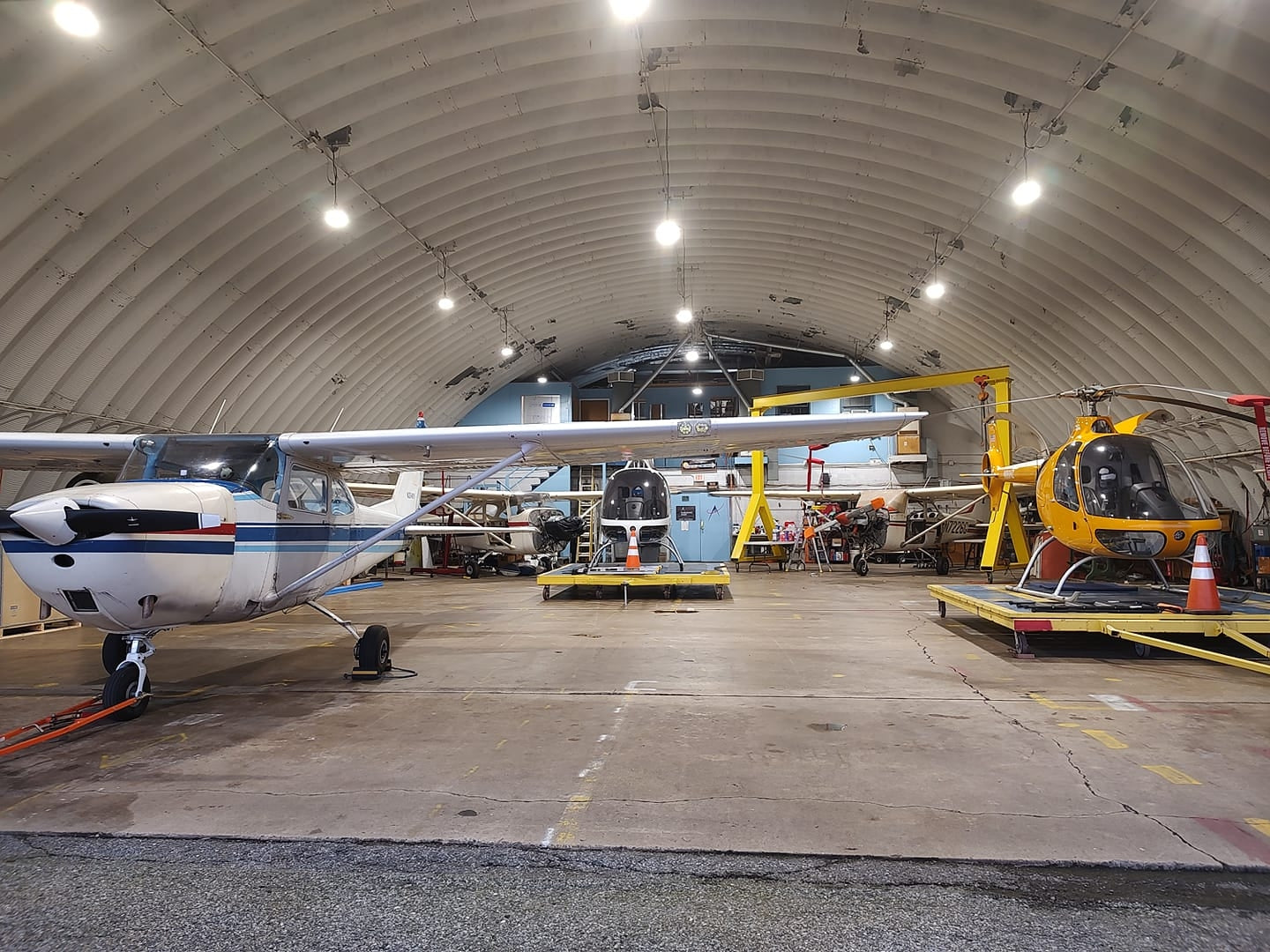
Lighting Layout and Uniformity
While clearance is the primary safety concern, inadequate lighting levels (lux/foot-candles) can also lead to accidents. A well-designed lighting layout ensures that operators can clearly see crane signals, load markings, and floor personnel.
For industrial manufacturing, a target of 30 to 50 foot-candles at the work plane is standard. Because cranes can block light from directly overhead, using fixtures with a 120-degree beam angle helps "wrap" light around the crane bridge, reducing the "shadowing effect" as the crane moves through the bay.
Summary of Best Practices
Positioning lighting in crane-equipped facilities is a specialized engineering task. By prioritizing low-profile UFO designs, adhering to the 3-4 foot clearance rule, and implementing vibration-resistant mounting techniques, facility managers can significantly reduce risk. The combination of rapid ROI and enhanced safety makes this a mandatory consideration for any modern industrial retrofit.
YMYL Disclaimer: This article is for informational purposes only and does not constitute professional engineering, electrical, or safety advice. Industrial lighting installations and crane operations involve significant risks. Always consult with a licensed electrical contractor, a structural engineer, and a certified safety professional to ensure compliance with local building codes, NEC standards, and OSHA regulations specific to your facility.


