

Selecting the optical configuration for industrial high-bay lighting is a decision that dictates the safety, productivity, and long-term operational costs of a facility. While many buyers focus exclusively on wattage and total lumen output, the beam angle—the spread of light from the fixture—is the primary variable determining whether a space is uniformly illuminated or plagued by "hot spots" and dark zones.
In professional B2B environments, such as 100,000-square-foot distribution centers or precision manufacturing plants, "guessing" at optics leads to non-compliance with ANSI/IES RP-7-21 (Lighting Industrial Facilities). This guide provides a technical breakdown of wide vs. narrow beam angles for circular LED high-bay fixtures, grounded in photometric data and real-world performance simulations.
The Photometric Foundation: Beam Angle vs. Field Angle
To specify lighting accurately, one must look beyond the marketing sheet. In the lighting industry, the "beam angle" is formally defined as the angle between the two planes of light where the intensity is at least 50% of the maximum intensity (usually measured at the nadir, or directly below the fixture).
However, seasoned lighting designers also evaluate the field angle. According to IES LM-79-19 (Solid-State Lighting Measurement), the field angle is the point where light intensity drops to 10% of its peak. While the beam angle defines the primary "work zone," the field angle defines the "spill," which is critical for achieving vertical illuminance on racking and walls.
The Role of the IES File
Every professional-grade fixture must provide a .ies file, a standardized electronic data format defined by IES LM-63-19. This file allows engineers to use software like AGi32 to simulate exactly how light will interact with the specific geometry of a warehouse. Without a verified IES file, any claim of "uniformity" is purely speculative.
Wide Beam Angles (120°): Maximizing Uniformity and Comfort
Wide-beam optics, typically 120°, are the industry standard for open-area lighting where the mounting height is between 15 and 25 feet. At these heights, the goal is often to maximize the "spacing criterion," allowing for fewer fixtures while maintaining an even wash of light across the floor.
Advantages of 120° Optics
- Visual Comfort (UGR Management): Wide beams spread the luminous intensity over a larger area, which typically results in a lower Unified Glare Rating (UGR). High-intensity, narrow beams can create significant direct glare for workers looking upward.
- Shadow Mitigation: By overlapping light from multiple fixtures, wide beams fill in shadows caused by large machinery or mezzanine levels.
- Vertical Illuminance: In retail or general storage, a 120° beam provides better "spill" onto vertical surfaces, making it easier to read labels on the sides of pallets.
The Spacing-to-Mounting-Height (S/MH) Ratio
A critical metric for 120° beams is the S/MH ratio. For most wide-beam fixtures, an S/MH of 1.2 to 1.5 is achievable. For example, at a 20-foot mounting height, fixtures can be spaced 24 to 30 feet apart while maintaining a uniformity ratio (Max:Min) of 3:1 or better, as recommended by the NREL National Best Practices Manual.

Narrow Beam Angles (60° to 90°): Precision and Punch
As ceiling heights climb above 25 feet, the "inverse square law" of light becomes a formidable challenge. Light intensity decreases exponentially with distance. To reach the floor with sufficient foot-candles (fc) without wasting energy on the upper walls, narrow beams (60° or 90°) are required.
When to Specify 60° Optics
- High-Ceiling Warehouses (30–45+ ft): At these heights, a 120° beam would lose too much intensity before reaching the work plane. A 60° beam "punches" through the distance to deliver the required 20–30 fc to the floor.
- Narrow Aisle Racking: In high-density storage, wide beams hit the top of the racks and create "veiling reflections" that can blind forklift operators or interfere with barcode scanners. A 60° beam focuses light into the aisle.
- Task-Specific Lighting: For assembly lines or inspection stations located under high ceilings, narrow optics concentrate the lumens exactly where the work occurs.
The "Aisle Optic" Misconception
While narrow beams are often associated with aisles, designers must be cautious. Research from machine-vision integrators suggests that overly aggressive narrow beams can create saturated highlights on barcodes, causing "camera bloom" and misreads. A 90° "medium" beam is often the safer compromise for modern automated warehouses to balance floor lux with scanner readability.
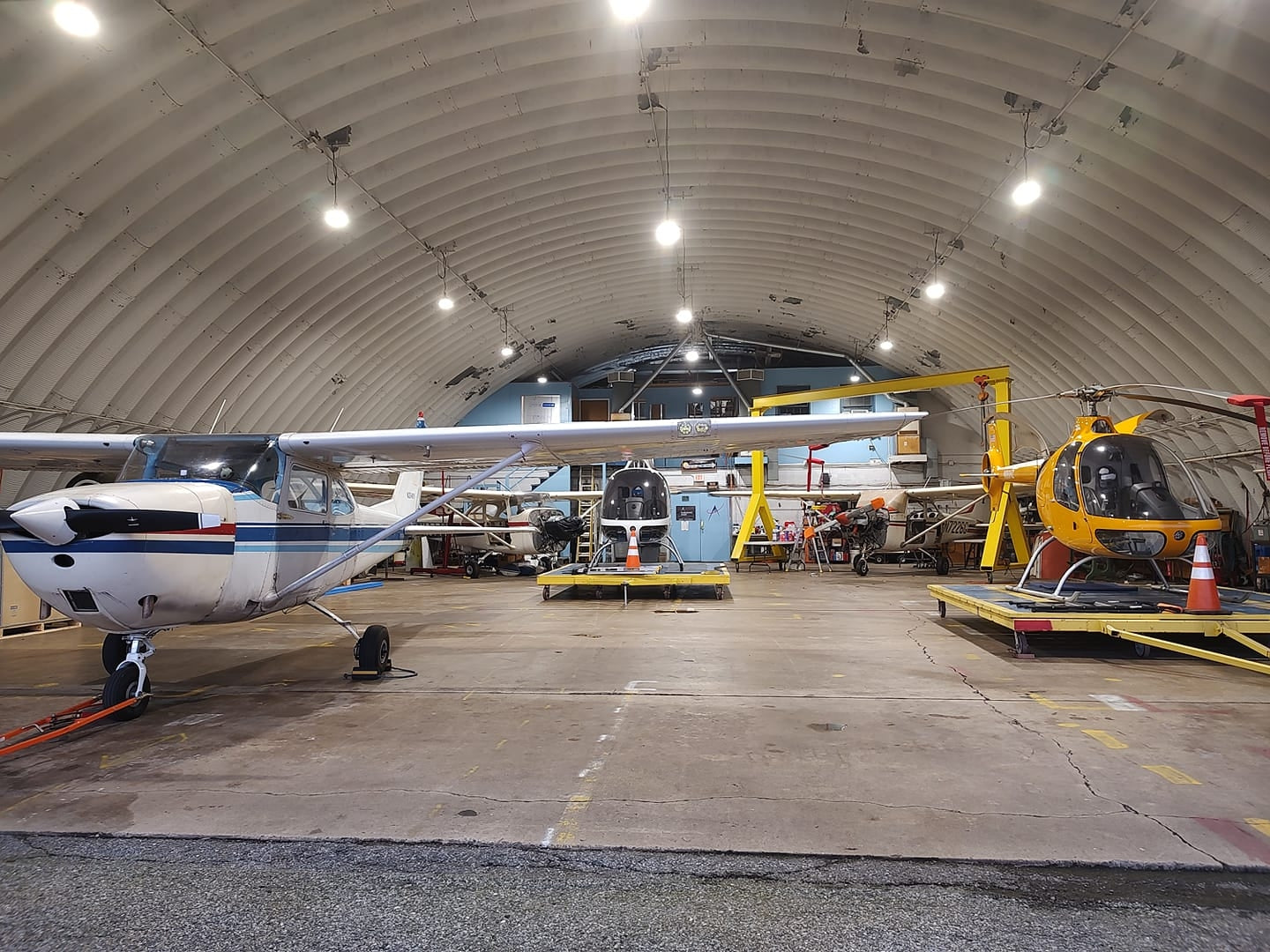
The "2x Mounting Height" Spacing Rule
A pragmatic rule of thumb for facility managers is the "2x Spacing Rule." For a standard 120° wide beam, the distance between fixtures should generally not exceed twice the mounting height.
| Mounting Height (ft) | Beam Angle | Recommended Max Spacing (ft) | Target Application |
|---|---|---|---|
| 15 - 20 | 120° | 30 - 40 | Low-bay / Retail / Garage |
| 20 - 30 | 90° - 120° | 40 - 50 | General Warehouse / Manufacturing |
| 30 - 45 | 60° - 90° | 45 - 60 | High-cube Storage / Hangars |
| 45+ | 60° | 50 - 65 | Heavy Industrial / Specialty |
Note: These values assume a target of 15-20 average foot-candles. For high-precision tasks requiring 50+ fc, spacing must be tightened significantly.
Technical Deep Dive: 35-Foot Warehouse Experiment
To demonstrate the impact of optics on Total Cost of Ownership (TCO), we simulated a 120x80 ft warehouse with a 35-foot mounting height. This height is the "inflection point" where the choice between 60° and 120° optics is most debated.
The Simulation Parameters
- Area: 9,600 sq. ft.
- Fixture: 300W LED (30,000 lumens, 100 lm/W).
- Target: 15 fc average (IES Category P).
- Reflectances: 80/50/20 (Ceiling/Walls/Floor).
Quantitative Findings
Using the lumen method, 10 fixtures were required. We then compared the distribution quality:
- Wide Beam (120°): Achieved a uniformity ratio of 0.72. The light was soft and diffuse, with minimal shadows. However, vertical illuminance on the walls was high, representing "spilled" light that didn't contribute to floor safety.
- Narrow Beam (60°): Achieved a uniformity ratio of 0.58. While it delivered 18% higher lux directly under the fixtures, it created "hot spots" that increased the UGR to 24, approaching the threshold for worker discomfort.
The ROI Calculation (LED Upgrade)
Replacing legacy 400W Metal Halide (458W system) with 10 of these 300W LED fixtures yields:
- Annual Energy Savings: $884.80 (at $0.14/kWh, 4,000 hrs/yr).
- Maintenance Savings: $720.00 (avoided bucket truck rentals and bulb replacements).
- Utility Rebate: $2,000 total (assuming DLC Premium certification).
- Simple Payback: 1.52 Years.
This experiment confirms that at 35 feet, while 60° optics provide more "punch," the 120° optics offer superior uniformity and visual comfort for workers, provided the fixture count is sufficient.

Compliance and Regulatory Standards
Specifying the wrong optics can lead to more than just bad lighting; it can lead to failed inspections or lost rebates.
1. DLC Premium and Utility Rebates
Most utility companies in North America require fixtures to be listed on the DesignLights Consortium (DLC) Qualified Products List to qualify for rebates. DLC 5.1 standards now include specific requirements for "Spectral Quality" and "Glare Control." A fixture with poorly designed 60° optics that produces excessive glare may fail DLC Premium criteria, stripping thousands of dollars in incentives from a project.
2. ASHRAE 90.1 and IECC 2024
Energy codes like ASHRAE 90.1-2022 and IECC 2024 mandate strict Lighting Power Density (LPD) limits. Using narrow optics efficiently allows a designer to meet foot-candle targets with lower total wattage, ensuring the building stays under the LPD cap (e.g., 0.40 W/sq. ft. for warehouses).
3. California Title 24, Part 6
For projects in California, Title 24 requires specific controls, including multi-level dimming and occupancy sensing. When using narrow-beam optics, the placement of these sensors is critical; a narrow beam may not trigger a sensor as effectively as a wide beam if the sensor's "field of view" is not aligned with the light's distribution.
Addressing Common Pitfalls
The "Lumen Trap"
A common mistake is selecting a 150W fixture over a 100W fixture simply because it has more lumens. However, if the 150W fixture has a 120° beam and is mounted at 40 feet, it will be less effective than a 100W fixture with a 60° beam. Effective Lumens (lumens delivered to the work plane) are more important than Source Lumens.
Glare and Machine Vision
In facilities using automated guided vehicles (AGVs) or robotic pickers, specular glare from narrow beams off polished concrete or shrink-wrapped pallets can "blind" the robots' optical sensors. In these environments, wide-beam optics paired with high-mounting heights are often preferred to create a more matte, diffuse environment.

Decision Matrix: Selecting the Right Optic
| Factor | Choose 120° (Wide) | Choose 60° / 90° (Narrow) |
|---|---|---|
| Ceiling Height | < 25 Feet | > 25 Feet |
| Primary Goal | Uniformity & Comfort | Intensity & Reach |
| Environment | Open floor / Retail | Racked aisles / High-bay |
| Worker Activity | General labor / Assembly | Forklift driving / Storage |
| Reflective Surfaces | Low (Dusty/Matte) | High (Shrink-wrap/Polished) |
| Spacing Criterion | High (1.3 - 1.5) | Low (0.8 - 1.1) |
Summary of Best Practices
Successful lighting design is an exercise in balancing intensity with uniformity. For low-to-mid ceilings, the 120° wide beam remains the gold standard for creating a safe, shadow-free environment that meets UL 1598 safety standards. As heights increase, transitioning to 90° or 60° optics becomes necessary to maintain energy efficiency and code compliance.
Always demand a verified LM-79 report and .ies file from the manufacturer. By applying the "2x Spacing Rule" and verifying the S/MH ratio against your specific ceiling height, you can ensure a lighting layout that enhances productivity while maximizing the ROI of your LED upgrade.
Disclaimer: This article is for informational purposes only. Lighting requirements vary by jurisdiction and specific application. Always consult with a licensed electrical contractor or lighting engineer to ensure your design meets local building codes and safety regulations.


