

In a high-intensity environment like a commercial fitness center or a dedicated home garage gym, the lighting system is more than a utility—it is a piece of infrastructure subject to frequent mechanical stress. Whether it is a stray basketball, a rebounding medicine ball, or a misplaced barbell during an overhead press, the physical demands placed on overhead fixtures can be significant. For facility managers and DIYers, choosing a fixture based solely on lumens or price often leads to a "shatter-and-replace" cycle that can substantially inflate the total cost of ownership (TCO).
Understanding the mechanical resilience of a light fixture requires looking past marketing claims and into engineering standards. The primary metric for this is the IK rating, a standardized code that defines how much kinetic energy a housing can absorb before failing. By aligning your lighting choice with the specific impact risks of your space, you can transition from fragile consumer-grade setups to durable installations designed to withstand real-world gym conditions.
The Science of Resilience: Decoding the IK Scale
The IK rating, governed by the international standard IEC 62262, provides a quantitative measure of protection against external mechanical impacts. Unlike vague marketing terms like "shatter-resistant," the IK code (ranging from IK00 to IK10) corresponds to specific energy levels measured in Joules (J).
To earn these ratings, fixtures undergo testing using a pendulum hammer, a spring hammer, or a vertical falling mass. According to IEC 62262/EN 62262 standards, the test involves five impacts distributed across the fixture's housing and lens. The energy ($E$) is calculated using the physics formula $E = m \times g \times h$ (mass × gravity × drop height).
Technical Reference: Impact Energy Levels
| IK Rating | Impact Energy (Joules) | Equivalent Impact Scenario | Recommended Application |
|---|---|---|---|
| IK05 | 0.7 J | Small hand tool drop (0.2kg from 35cm) | Residential closets, low-traffic areas |
| IK07 | 2.0 J | 0.5kg mass dropped from 40cm | Standard workshops, storage |
| IK08 | 5.0 J | 1.7kg mass dropped from 30cm | Minimum for Home Gyms / Light Sports |
| IK09 | 10.0 J | 5kg mass dropped from 20cm | Commercial Gyms, Multi-use courts |
| IK10 | 20.0 J | 5kg mass dropped from 40cm | High-Impact zones (Medicine ball slams) |
Note: Calculations based on standardized impact energy levels defined in IEC 62262. Projections assume fixtures are mounted at standard operating temperatures. Actual performance may vary based on mounting angle and ambient temperature.
For most gym environments, an IK08 rating is generally considered the "baseline of professional entry." It typically provides enough protection to survive a direct hit from a basketball or a volleyball without the lens fracturing. However, for areas involving heavy equipment or medicine ball slams (which can exceed 15-20 Joules of force depending on the thrower), specifying IK09 or IK10 is a strategic move to prevent internal component fatigue.
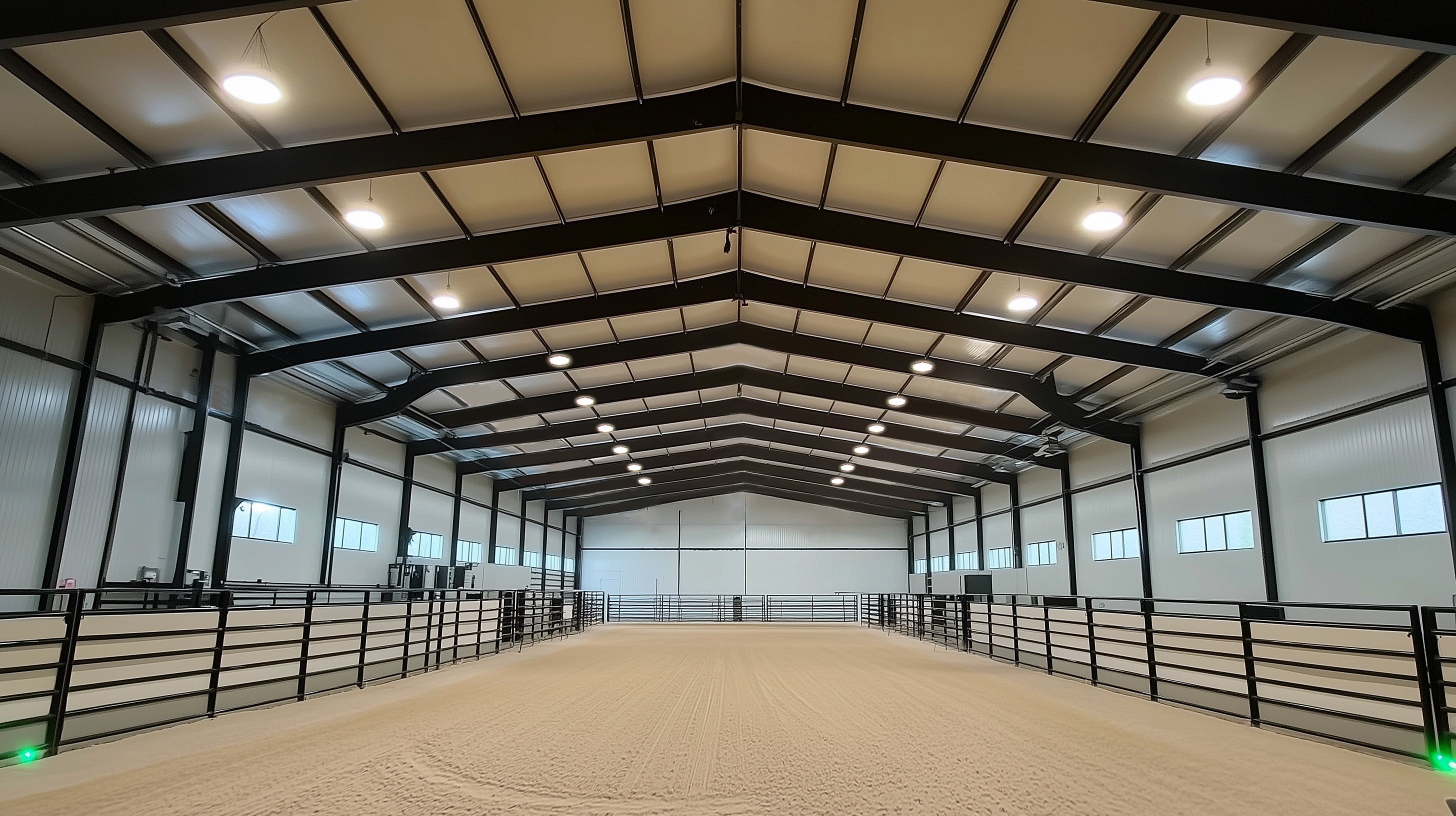
Why Gyms Demand "Solid" Engineering
In a gym, impacts are a predictable occurrence rather than a rare accident. This environmental stress necessitates a robust approach to fixture selection, focusing on the mechanical components that contribute to durability.
1. The Heatsink: Cold-Forged vs. Die-Cast
Durability starts with the chassis. Many budget fixtures use thin, die-cast aluminum that can crack under sharp impacts. High-performance models, such as the Hyperlite LED High Bay Light - Black Hero Series, utilize pure aluminum cold-forged housing. Cold forging increases the density of the metal, providing superior thermal transfer (often exceeding 200 W/m·K) to extend component life while offering a more rigid structure that resists deformation during a collision.
2. Lens Material: The Polycarbonate Advantage
Glass lenses are a significant liability in fitness spaces. Under impact, glass can shatter into hazardous shards. Professional gym fixtures use high-grade Polycarbonate (PC). According to the IES RP-7-21 Recommended Practice for Industrial Facilities, materials must maintain optical clarity and structural integrity under mechanical stress. A durable PC cover acts as a shock absorber for the LED chips beneath.
3. The Mounting Yoke: The Unsung Hero
Side-impacts from balls can exert significant leverage on a mounting point. A reinforced, gusseted yoke design distributes this shock across the fixture’s body rather than concentrating it on a single bolt, reducing the risk of the fixture being knocked out of alignment or falling.
Field Observation - Case Study: In a local CrossFit box facility, standard "shop lights" with thin metal housings were replaced after three months because the vibration from medicine ball slams against the ceiling joists caused the internal driver solder joints to fail, even though the lenses were untouched. Replacing them with IK08-rated UFO high bays resolved the flickering issues by providing better internal shock dampening.
Friction Point: The Rigid Conduit Mistake
A common installation error is connecting the fixture directly to rigid conduit. Rigid connections transmit every structural vibration and impact force directly into the fixture’s internal electronics. To potentially extend the life of your light, consider using a flexible whip or a vibration-isolating hanger. This allows the fixture to "give" slightly upon impact, dissipating energy that might otherwise fracture internal components.
The Economic Reality: ROI of Durable Lighting
While IK-rated fixtures may have a higher initial cost, a Total Cost of Ownership (TCO) analysis often reveals they are the more fiscally responsible path over a 5-year horizon.
5-Year Investment Projection (10 Fixtures)
Model Assumptions: 10 fixtures, 4,000 annual operating hours, $0.12/kWh electricity rate. Payback period calculated as: (Incremental Cost of Upgrade) / (Annual Energy + Maintenance Savings).
| Metric | Legacy Metal Halide (458W) | Durable IK08 LED Upgrade (150W) |
|---|---|---|
| Annual Energy Consumption | 13,740 kWh | 4,500 kWh |
| Annual Energy Cost (@$0.12/kWh) | $1,648.80 | $540.00 |
| Maintenance/Bulb Replacements | $300.00 | $0.00 |
| HVAC Savings (Reduced Heat Load) | $0.00 | $180.00 |
| Total 5-Year Cost | $9,744.00 | $3,342.50 |
| Estimated 5-Year Savings | - | $6,401.50 |
Transparency Note: The "1.1-year payback period" refers specifically to commercial settings with high run-times (11+ hours/day). For a residential garage gym running 500 hours/year, the payback period would extend to approximately 8-9 years, though the safety benefit remains immediate. HVAC interactive factor of 0.33 applied per ASHRAE 90.1 modeling guidelines.
The "Durability Premium" is often recovered through the avoidance of a single maintenance call. In a commercial setting, hiring an electrician to replace one shattered high-bay can cost $150–$250 in labor—frequently more than the price of the fixture itself. Furthermore, the DesignLights Consortium (DLC) QPL identifies fixtures that may qualify for utility rebates, which can offset 30-70% of the purchase price.
Scenario Analysis: Matching Fixture to User
Scenario 1: The "High-Performance" Commercial Zone
Environment: A 3,000 sq. ft. CrossFit box with 18-foot ceilings. Recommendation: Specify IK10-rated fixtures with reinforced yokes. Even if the lens survives, the internal driver must be rated for high vibration. Using a selectable wattage fixture like the Hyperlite Black Hero Series allows the manager to fine-tune brightness to achieve the 50 foot-candle level recommended for sports by IES RP-7.
Scenario 2: The "Multi-Purpose" Home Garage Gym
Environment: A standard 2-car garage with a 10-foot ceiling. Recommendation: IK08 is a prudent minimum. Because the ceiling is low, glare is a concern. A fixture with a 120° wide beam angle and a frosted PC lens—found on models like the Hyperlite BP Series—provides the uniform illumination needed for safety without blinding the user during floor exercises.
The "5-Minute Mechanical Audit" Checklist
Before finalizing your gym lighting layout, perform this quick audit:
- Vertical Clearance: Are any fixtures mounted directly above a power rack? (Barbells are a common cause of light damage).
- Conduit Flex: Is there a flexible connection to dampen impact energy?
- Lens Integrity: Does the fixture use Polycarbonate (IK08+) or standard glass?
- Thermal Management: Is the heatsink cold-forged aluminum? (Superior heat dissipation protects the driver).
- Safety Tether: Is a safety cable installed? In a gym, a broken mount should not result in a fixture falling on an athlete.
Technical Compliance: Beyond the Impact
- UL 1598 Certification: Ensure your fixture is UL Listed. This covers the safety of luminaires and is often required for insurance compliance.
- FCC Part 15: Compliance with FCC Part 15 ensures lights won't interfere with heart rate monitors or wireless speakers.
- IP65 Rating: According to IEC 60529, an IP65 rating ensures the fixture is "dust-tight" and protected against water jets, making it easy to clean.
Symptom Decoder: Post-Impact Troubleshooting
| Symptom | Potential Mechanical Root Cause | Recommended Action |
|---|---|---|
| Intermittent Flickering | Fractured solder joint on driver. | Replace fixture; switch to flexible mounting. |
| Partial LED Failure | Impact force localized to one "string" of chips. | Verify IK rating; consider wire guards in high-risk zones. |
| Loud Humming | Loose internal component or driver housing. | Check all screws and yoke gussets for tightness. |
| Visible Yellowing | Low-quality lens material (not UV-stabilized). | Specify fixtures with high-grade, UV-treated PC covers. |
Strategic Takeaways
Building a resilient gym lighting system is an exercise in risk management. By prioritizing IK-rated fixtures, you protect your financial investment and enhance the safety of the facility.
- Prioritize IK08+: Avoid standard "shop lights" in active gym zones; the lack of impact testing presents a safety risk.
- Leverage Rebates: Check the DLC QPL for incentive-eligible fixtures.
- Mind the Mounting: Use flexible whips to decouple the light from building vibrations.
Note: Hyperlite products are cited as technical examples of IK-rated engineering; alternative brands with equivalent UL/DLC/IK08 certifications may provide similar performance.
Frequently Asked Questions (FAQ)
Can I just put a wire cage around a cheap light? A wire guard protects against large objects but does not improve internal shock resistance. A budget light may still suffer driver failure from the vibration of an impact. An IK-rated fixture is engineered from the inside out to handle mechanical shock.
Is 5000K or 4000K better for a gym? 5000K (Daylight) is often preferred for high-energy environments to improve alertness. 4000K is frequently chosen for home gyms to avoid a "clinical" feel.
How do I know if my light is truly UL Listed? Verify certifications by searching the UL Product iQ Database using the manufacturer's file number.
YMYL Disclaimer: This article is for informational purposes only and does not constitute professional electrical or structural engineering advice. Always consult with a licensed electrician and adhere to local building codes (such as the NEC) before performing any electrical installations.


