

The Critical Intersection of Performance and Life Safety
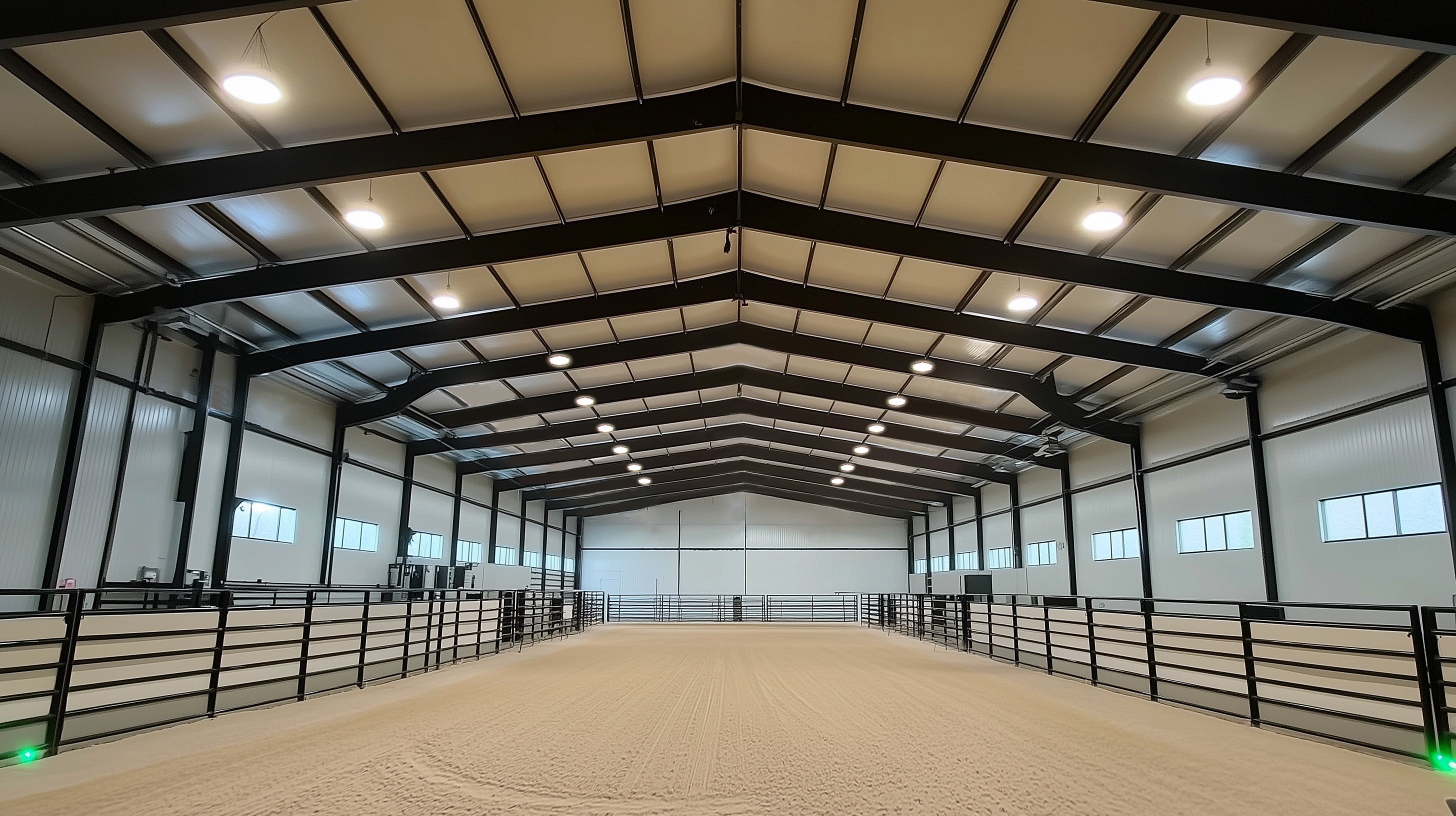
In a high-occupancy sports arena, lighting is more than a utility; it is a critical life-safety component. When the power fails during a packed event, the transition from high-intensity play to emergency egress must be instantaneous and reliable. For facility managers and B2B contractors, achieving compliance with the International Building Code (IBC) and the National Fire Protection Association (NFPA) requires more than just hanging fixtures. It demands a sophisticated integration of high-performance Light Emitting Diode (LED) high bays with robust emergency backup systems.
The challenge lies in the environment itself. High ceilings (often 40 feet or higher) create unique photometric hurdles, while the thermal dynamics of a large venue can silently degrade battery components. This guide provides a technical roadmap for navigating egress compliance, grounded in verifiable data and professional-grade standards. For a broader look at the evolving landscape of industrial lighting, see the 2026 Commercial & Industrial LED Lighting Outlook: The Guide to Project-Ready High Bays & Shop Lights.
The Regulatory Framework: IBC Chapter 10 and NFPA 101
Life safety compliance is governed primarily by two standards: IBC Chapter 10: Means of Egress and NFPA 101: Life Safety Code. These regulations mandate that the "means of egress"—the continuous and unobstructed path of vertical and horizontal egress travel from any occupied portion of a building to a public way—must be illuminated whenever the building is occupied.
Illumination Levels and Uniformity
The baseline requirement for emergency lighting is an initial illumination of at least 1 footcandle (fc) (10.76 lux) measured at the walking surface. However, simply reaching 1 fc is insufficient. The [NFPA 70 - National Electrical Code (NEC)](https://www.txdot.gov/manuals/trf/hwi/resources/glossary-i1011993/nfpa__national_electric_code_nec-i1025329.html) and local Authority Having Jurisdiction (AHJ) also look for uniformity.- Minimum Illumination: 1 fc at any point along the path of egress.
- Uniformity Ratio: A maximum-to-minimum illumination ratio of 40:1 is typically allowed, though professional designers aim for a 10:1 ratio to prevent "hot spots" and "dark zones" that can disorient evacuees.
- Duration: Systems must maintain these levels for a minimum of 90 minutes during a power failure.
The "Walking Surface" Pitfall
A common mistake we observe in arena audits is calculating footcandles at the fixture level rather than the floor. At a 40-foot mounting height, light loss is significant. If your photometric plan shows 1 fc at the fixture, you will likely fail inspection at the walking surface. Professional-grade layouts must account for the beam angle—typically 90° for high-ceiling arenas—to ensure sufficient "punch" to reach the floor with the required intensity.Technical Reliability: Beyond the Spec Sheet
For B2B procurement, safety is verified through standardized testing. You cannot rely on marketing claims; you must demand artifacts of compliance.
LM-79, LM-80, and TM-21 Standards
To ensure the fixture will perform when needed, look for the following reports: 1. **[IES LM-79-19](https://blog.ansi.org/ansi/ansi-ies-lm-79-19-solid-state-lighting-led/):** This is the "performance report card." It measures total lumens, efficacy (lumens per watt), and color rendering. It is the basis for all photometric simulations. 2. **[IES LM-80-21](https://webstore.ansi.org/standards/iesna/ansiieslm8021):** This measures how the LED chips themselves degrade over time (lumen maintenance). 3. **[IES TM-21-21](https://store.ies.org/product/tm-21-21-projecting-long-term-luminous-photon-and-radiant-flux-maintenance-of-led-light-sources/):** This uses LM-80 data to project the fixture's long-term life, such as $L_{70}$ (the point where the light output drops to 70% of its original value).Expert Insight: Be wary of "100,000-hour life" claims. According to TM-21 guidelines, projections cannot exceed six times the actual test duration of the LM-80 data. If a manufacturer hasn't tested for at least 16,000 hours, they cannot legally claim a 100,000-hour $L_{70}$ life.
The DLC Premium Advantage
For facility managers, the [DesignLights Consortium (DLC) Qualified Products List (QPL)](https://designlights.org/qpl/) is the primary gatekeeper for utility rebates. DLC 5.1 Premium certification ensures the fixture meets high efficacy and color quality standards, which directly impacts the Return on Investment (ROI) of a safety upgrade.
Scenario Modeling: The ROI of Safety Upgrades
Upgrading arena lighting to LED systems with integrated Battery Backup Units (BBUs) is often viewed as a cost center. However, our scenario modeling demonstrates that it is a strategic financial investment.
Case Study: Mid-Sized Municipal Arena Retrofit
We modeled a retrofit for a 15,000-seat arena replacing 50 legacy 1000W Metal Halide (MH) fixtures with 400W LED UFO high bays featuring integrated BBUs.
| Parameter | Value | Unit | Rationale |
|---|---|---|---|
| Fixture Count | 50 | count | Standard mid-sized arena |
| Annual Operating Hours | 4,380 | hours | 12h/day operation |
| Electricity Rate | 0.18 | $/kWh | Urban commercial average |
| Maintenance Savings | 8,418 | $/year | Reduced lamp/ballast replacements |
| HVAC Cooling Credit | 763 | $/year | Reduced heat load from LEDs |
| Annual Total Savings | 32,834 | $ | Combined energy & maintenance |
| Simple Payback | 0.84 | years | Post-rebate ($15,000) |
Modeling Disclosure: This is a deterministic scenario model based on standard industry heuristics (e.g., HVAC interactive factor of 0.33 per DOE studies). Actual savings may vary based on specific utility tariffs and local labor rates.
Environmental and Social Governance (ESG) Impact
Beyond the dollar savings, the retrofit provides significant carbon reduction metrics. The annual electricity savings of ~118,260 kWh translate to a reduction of **48 metric tons of CO₂ annually**. This is equivalent to planting nearly 800 tree seedlings and growing them for 10 years, providing tangible data for municipal sustainability reports.The "Gotchas" of Arena Emergency Lighting
Experience in the field reveals patterns that standard codes often miss. Two major factors can compromise a "compliant" system: temperature and smoke.
The Battery Temperature Sensitivity Rule
The most common failure point in arena emergency lighting is the battery backup system. Most BBUs use sealed lead-acid or lithium-based batteries that are highly sensitive to heat. * **The Heuristic:** For every 10°C (18°F) increase in ambient temperature above 25°C (77°F), the functional life of the battery is halved. * **The Arena Reality:** Arenas experience massive temperature swings. During a sold-out concert, the heat rising to the 40-foot ceiling can easily exceed 35°C. Without proper ventilation or strategic placement of BBUs away from heat-generating equipment, a battery rated for 5 years may fail in 2.Smoke Stratification and Visibility
Conventional wisdom suggests that 1 fc of egress lighting is enough for evacuation. However, research into fire dynamics shows that smoke in high-ceiling environments stratifies. Hot smoke rises and collects at the ceiling, potentially obscuring high-mounted fixtures within minutes. * **Counter-Consensus Insight:** While standard fixtures provide the required floor-level illumination, they can lose visibility in smoke. We recommend a layered approach: high bay egress lighting for general illumination, supplemented by low-level photoluminescent path markings that remain visible beneath the smoke layer.
Installation and Circuit Planning
Proper installation is governed by the NEC and requires careful circuit design to handle the "continuous load" of arena lighting.
0-10V Dimming and Control Integration
Modern codes like [ASHRAE Standard 90.1-2022](https://www.ashrae.org/technical-resources/bookstore/ansi-ashrae-ies-standard-90-1-2022-changes) and [IECC 2024](https://codes.iccsafe.org/content/IECC2024P1/chapter-4-ce-commercial-energy-efficiency) mandate lighting controls, such as occupancy sensors and daylight harvesting. * **Storage Areas:** In back-of-house storage, adding occupancy sensors can yield a 62.5% energy savings fraction. * **Wiring Standards:** Ensure your 0-10V dimming wires are correctly classified. Mixing Class 1 and Class 2 wiring in the same conduit is a frequent NEC violation that can lead to signal interference and flickering.Electrical Load Reality Check
Emergency lighting circuits must be sized for continuous load (125% of the actual load per NEC). For a large arena, the cumulative wattage of emergency fixtures can be massive. Proper circuit planning must include: 1. **Dedicated Emergency Circuits:** Separated from general lighting to ensure they remain energized via a generator or central inverter. 2. **Voltage Drop Calculations:** On long runs typical of arenas, voltage drop can reduce the efficacy of the fixtures at the end of the line.Verification: The Final Step
Once the fixtures are installed, verification is mandatory. This is not just about turning the lights on; it’s about proving they meet the code.
- Photometric Field Testing: Use a calibrated light meter to measure footcandles at the floor level. Ensure measurements are taken in the "worst-case" scenario (emergency mode only).
- Documentation: Keep a "Life Safety Binder" containing the UL 1598 and UL 8750 certificates, LM-79 reports, and the stamped photometric plan. This is your "unimpeachable evidence" during an AHJ inspection.
- Annual Testing: NFPA 101 requires a 30-second monthly test and an annual 90-minute full-duration test. Many modern professional-grade high bays include self-diagnostic features that automate this process, significantly reducing maintenance labor.
By focusing on verifiable performance data and addressing the practical challenges of the arena environment, facility managers can ensure that their lighting systems are not just "bright," but truly safe.

YMYL Disclaimer: This article is for informational purposes only and does not constitute professional engineering, legal, or fire safety advice. Lighting requirements vary by jurisdiction and specific building use. Always consult with a licensed professional engineer (PE) and your local Fire Marshal to ensure full compliance with all applicable codes and standards.


